Young people in our Youth Panel have been working with researchers in the University of Southampton’s Faculty of Medicine, as part of an exciting new collaboration.
What is the Youth Panel?
Since 2022, young people have been employed on LifeLab Youth Panels as equal partners on projects shaped and inspired by them. The Youth Panel was established to provide a space for young people to discuss the health-related things that concern them. It allows them to actively create and implement solutions that could improve their own health and that of their peers.
First Youth Panel collaboration
The project, Impact Case Studies Go Wild!, gave the young people the opportunity to take complex medical research and transform it into accessible formats for the public. It was led by Professor Lucy Green, Head of Engagement for the Faculty of Medicine, and Kate Bittlestone, Research and Enterprise Manager. Over the course of three sessions, they explored how medical research translates into real-world impact. This included insights from Dr Charles Opoku, Yaryna Basystyuk, Dr Michael Head and Prof Lucy Green. The young people then heard from researchers, questioned the research, and created original pieces inspired by their favourite theme.
Professor Kath Woods-Townsend, LifeLab Director, highlighted the significance of this collaboration:
“This was the first time a project external to LifeLab engaged with the Youth Panel, showcasing the unique opportunity for researchers across the Faculty of Medicine to work with young people and embed their perspectives into their work.”
Chelsea’s film and Seth and Gayathri’s poetry – using AI in cancer treatment
Dr Navamayooran Thavanesan’s research focuses on improving outcomes for patients with oesophagogastric cancer—a type of cancer affecting the food pipe and stomach. While surgery remains the primary treatment, many patients also require chemotherapy or radiotherapy, which can have significant side effects. Dr Thavanesan’s team is developing a machine-learning tool to assist teams working on upper gastrointestinal surgery, with the aim of improving patient outcomes.
Inspired by this project, Chelsea created a video, featuring an interview with Dr Thavanesan. This explored how AI could streamline diagnosis and treatment, potentially replacing invasive procedures like CT scans with simple blood tests.
“I believe this research has the potential to change lives.”
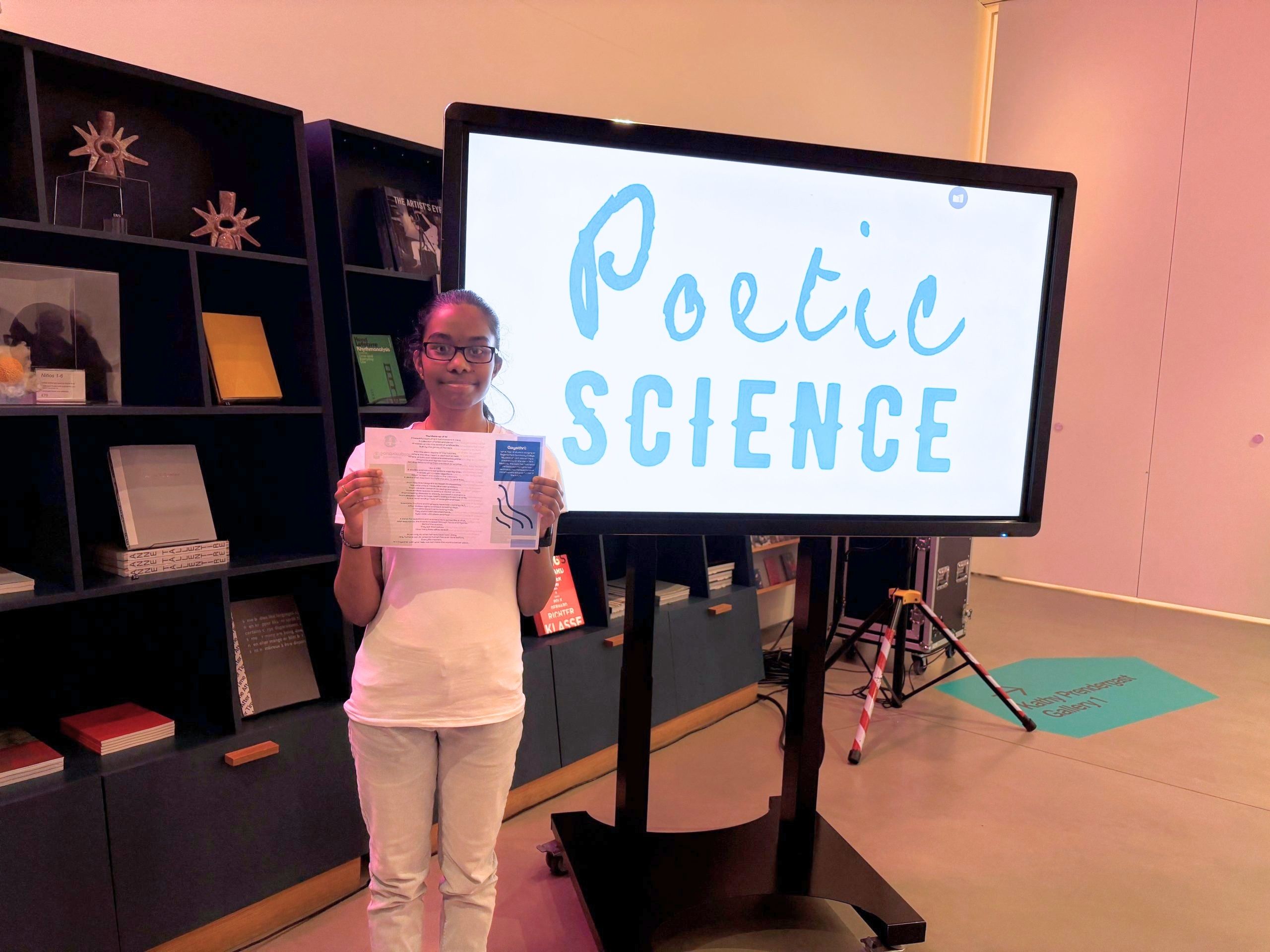
Seth and Gayathri expressed their thoughts through poetry. Gayathri’s poem, ‘The Make-Up of AI’, reflects on how technology can transform healthcare and save lives. Seth’s poem focused on the long-term benefits of AI in medicine. Dr. Thavanesan was particularly struck by how the students captured both the promise and concerns surrounding AI in healthcare.
“Anything that can improve healthcare and save lives should be prioritised.”
– Seth
“The young people recognised the anxiety patients might feel about AI, yet their work carried a strong undercurrent of optimism.”
– Dr Thavanesan
Gayathri and Seth’s poems were showcased at Poetic Science Live in March. Poetic Science is a key part of the Science and Engineering Festival, blending science with the arts to create innovative approaches to public engagement.
Imogen’s poster and Uyathandwa’s interview – RSV vaccine trials for infants
Respiratory Syncytial Virus (RSV) is a leading cause of respiratory infections in young children. Dr Alasdair Munro is leading a trial of a vaccine designed to protect infants from RSV.
Inspired by his work, Imogen created a poster promoting the trial and encouraging parents to participate. She highlighted key findings, including the vaccine’s 81% effectiveness in preventing illness.
“Understanding RSV is the first step to driving change and improving care.”
Uyathandwa was also drawn to the project’s potential to raise awareness. She conducted an interview with Dr Munro, spotlighting the key findings of his study
Reflecting on the experience, Dr Alasdair Munro said:
“I enjoyed the sessions, and the challenge of explaining my research in a way that young people could understand. It has helped me think about how to communicate clinical trial information more clearly in patient and participant facing materials.”
Jayden’s presentation – Acne Care online
Acne affects over 90% of teenagers and many adults. Professor Miriam Santer’s Acne Care Online initiative seeks to help young people find effective treatments, reduce antibiotic overuse, and address the mental health impact of acne. Her team is also exploring spironolactone as an alternative treatment for adult female acne. Interested in this topic, Jayden created a presentation to educate teenagers about acne.
“IIt’s important for people to know the best options because acne affects so many.”
– Jayden
Ashmin’s video – climate change and health
Dr Michael Head’s research explores the relationship between climate change and health. It highlights its role in worsening health inequalities and its impact on vulnerable populations. In response, Ashmin created a video highlighting the health consequences of climate change. She interviewed peers to capture their perspectives and emphasised the urgency of action. Dr Head valued the insights the students provided. By translating medical research into creative and accessible formats, these young people have helped bridge the gap between science and the public.
“It’s useful to understand young people’s perspectives and where they’re coming from.”
– Dr Michael Head
“This initiative shows how young people can be powerful ambassadors for science, making research more relatable and engaging.”
– Professor Lucy Green