Morgan Mason is seeing if our Early LifeLab programmes are achieving their aim of giving primary school children what they need to make healthy choices.
LifeLab for young children
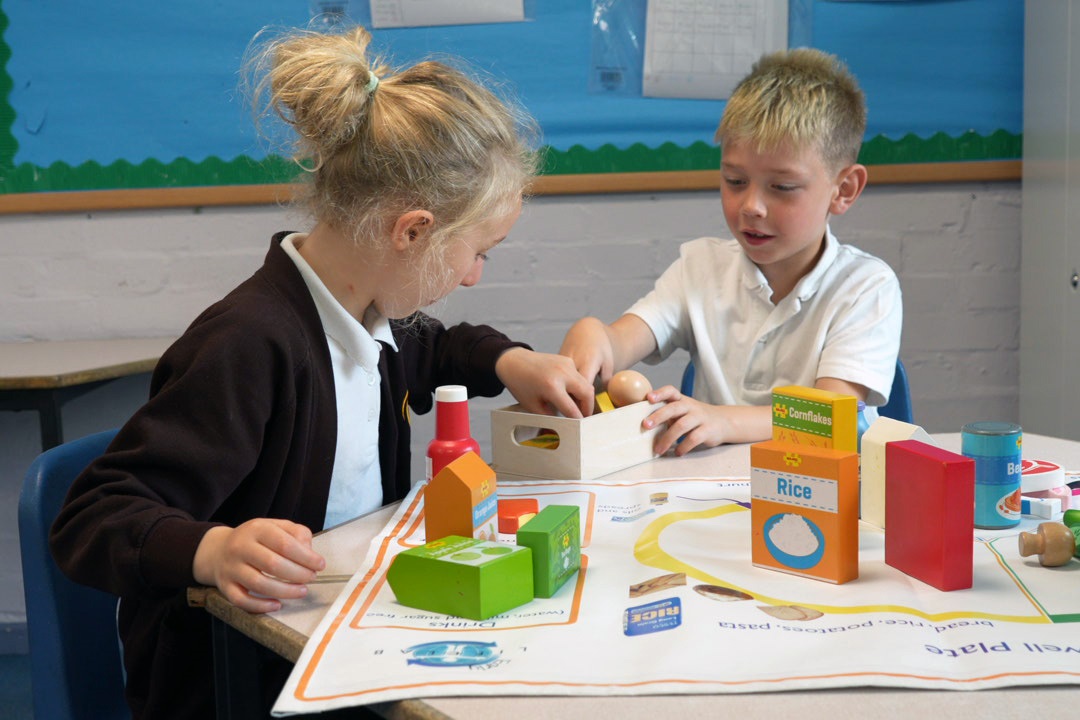
While secondary school children visit our LifeLab facility at University Hospital Southampton, we take a different approach for primary school children. We send out ‘flight cases’, huge boxes on wheels, to primary schools. These are filled with all the equipment and instructions they need to complete our Early LifeLab activities. In this way, the children do the Early LifeLab activities with their teachers at their own school. This means they complete our modules with familiar people in a familiar environment.
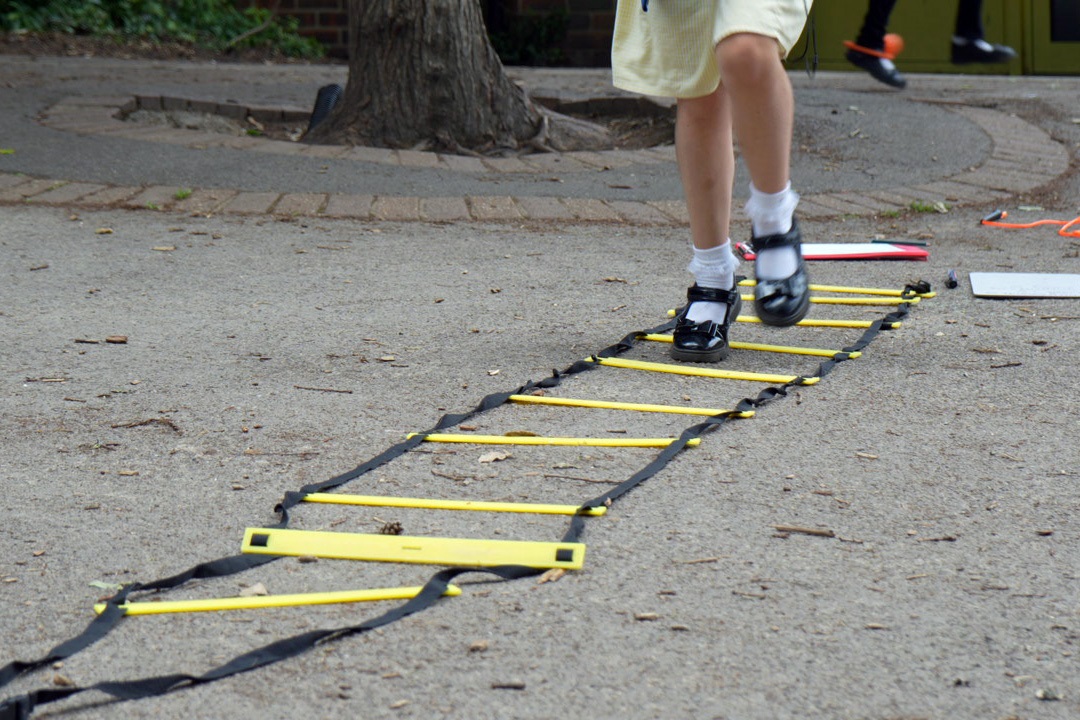
We offer our Early LifeLab modules for students in Reception and years 2, 3 and 6. The activities are tailored to each year group, ensuring they are appropriate for each age.
Early LifeLab does more than just tell children what they need to do to be healthy, as this is not enough to change their behaviour. They also need ‘self-efficacy’ – the belief that they will be able to do it. They get this by experiencing it.
“In these activities, the children learn about different aspects of health, nutrition and movement, and why these are important for them.”
“The idea with Early LifeLab is that children are receiving the science behind why it’s important to be healthy. When you understand a bit more about why something is important for you, and you have hands-on activities to back up those concepts, you start to build confidence in doing those activities. That raises your self-efficacy in doing that action or making those choices.”
Morgan’s journey from America
Morgan and her partner emigrated in 2019. She says that nutrition, health and exercise have always been really important to her, both personally and for her research. Before coming to the UK, she completed a master’s degree in mental health counselling. This explored the effects of nutrition and exercise on mental health, and included work with young people in a mental health facility. Morgan previously worked for the University of Southampton’s Research and Innovation Services. At one of their events, she had the opportunity to meet our director, Kath Woods-Townsend, and learn about LifeLab.
“I always wanted to get into academia, and I wanted to fulfil getting a PhD at some point, so when the LifeLab opportunity came up, that was just really good timing.”
Completing Remy’s story
Morgan started her PhD in September 2023, which focuses on evaluating the Early LifeLab programme. Her job is to go into schools before the children begin using the activities, and do a pre-evaluation with them. After they use the activities, she does do a post-evaluation.
This sounds quite straightforward, until you consider that many children are too young to be able to read or write. The idea is to come up with techniques to evaluate the children that are useful, and will give genuine information from the children at that age. This is quite difficult, because a lot of metrics we use are adult-centred metrics, such as questionnaires. During her PhD, Morgan is therefore working to develop new methods that are more suitable for primary school age children. She wanted to make these contextual, and to gather information in a way that helps understand their perceptions of health.
For example, she has developed a ‘story completion’ task. In this, the children are asked to complete an unfinished story about a fictional character called Remy going to school. The children are given prompting questions, such as ‘What kinds of foods might Remy eat to feel good?’ and ‘What kinds of exercise might Remy do to feel good?’ to help them complete it.
Seven schools and just over a hundred children have taken part in the pilot stage of the project. It started at the beginning of 2024 and finished in November the same year. Morgan has used the insights she’s gained from this to refine her evaluation techniques. This has included changing the text for the story completion activity into a comic strip, so children who find it difficult to read can visualise it better. She has also changed it so that they can now choose to complete the story by drawing instead of writing.
Doing the evaluation
Morgan is now using these refined methods to complete her evaluation of Early LifeLab. This started at the beginning of 2025, and is due to finish at the end of the Spring term in 2026.
So far 13 schools and just over 200 children have taken part. She is aiming to have around 700 children taking part overall. The aim is to show that Early LifeLab is doing what it intends to do – give primary school children the knowledge, understanding and ability to make healthy choices.
“There’s certain concepts I’m measuring, such as the children’s perceptions of health, that give us an indicator that children are learning about these concepts and embodying some of these behavioural changes.”
Morgan says the evaluation provides an opportunity to talk to teachers to find out how they are using it, and identify any aspects of the programme that could be improved. It could also be used to identify any barriers the children are experiencing, which may prevent them from being able to make healthy choices, such as a lack of access to healthy food.
Ultimately, Morgan says she hopes that the results from the evaluation might lead to wider changes, such as policy recommendations, that could help more children live healthy lives.