Introduction
Student programme

Student booklet
Admissions
Frequently asked questions
The below information is correct at the time of distribution. Please check the University website before submitting your application to make sure nothing has changed or been updated.
During the summer, consider:
- which medicine course is correct for you?
- do you meet our academic entry requirements?
- are you old enough?
You must be 18 by the course start date. If you are 17, you will be offered a deferred place for the following year. - are you eligible in terms of fees status?
Home and EU students are eligible for the BM4, BM5 and BM6 programmes. International and overseas students are eligible for the BM5 programme. - when writing your personal statement or think about your current work experience, consider our non-academic requirements.
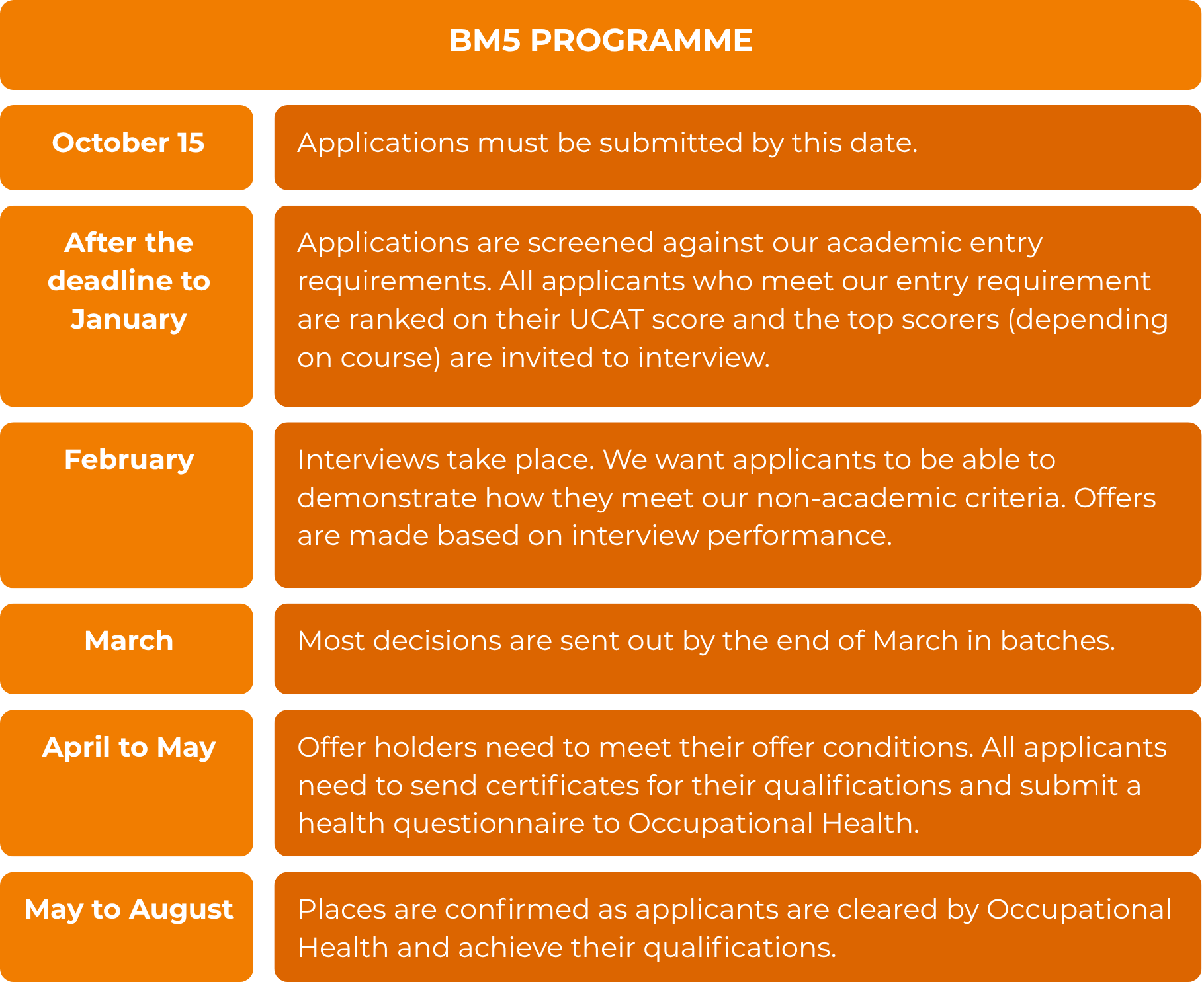
- have you sat the UCAT test?
All applicants are required to sit this test and must sit it before the October deadline. Learn more about the test.
These are the lowest UCAT scores we invite to interview in 2022:
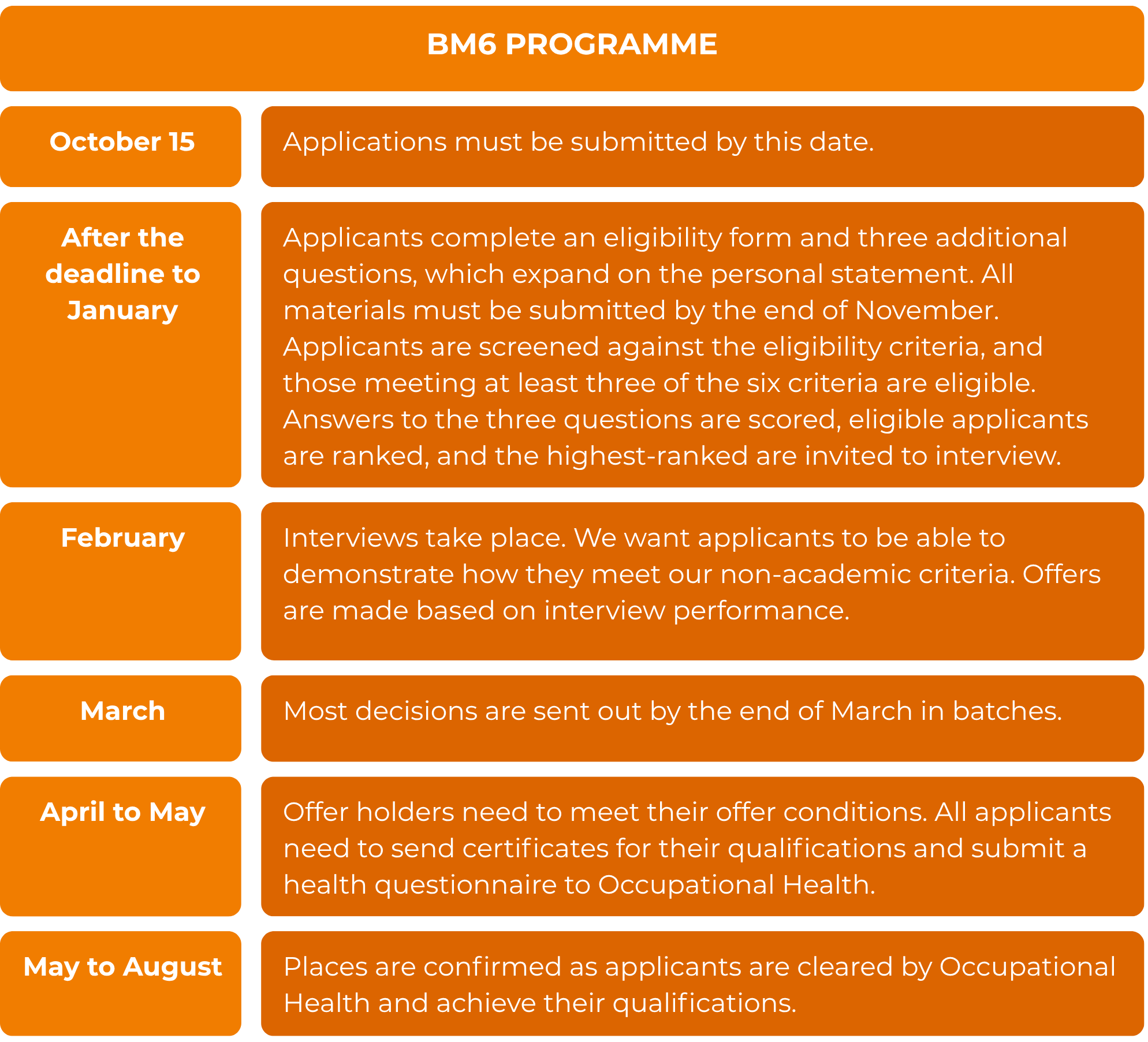
- BM6: The test has to be sat but applicants are not ranked by UCAT score.
- BM5 school leaver: 2750
- BM5 contextual applicants: 2570
Submitting your application
You must apply through UCAS. We do not accept any applications past the deadline.
After application
Entry requirements
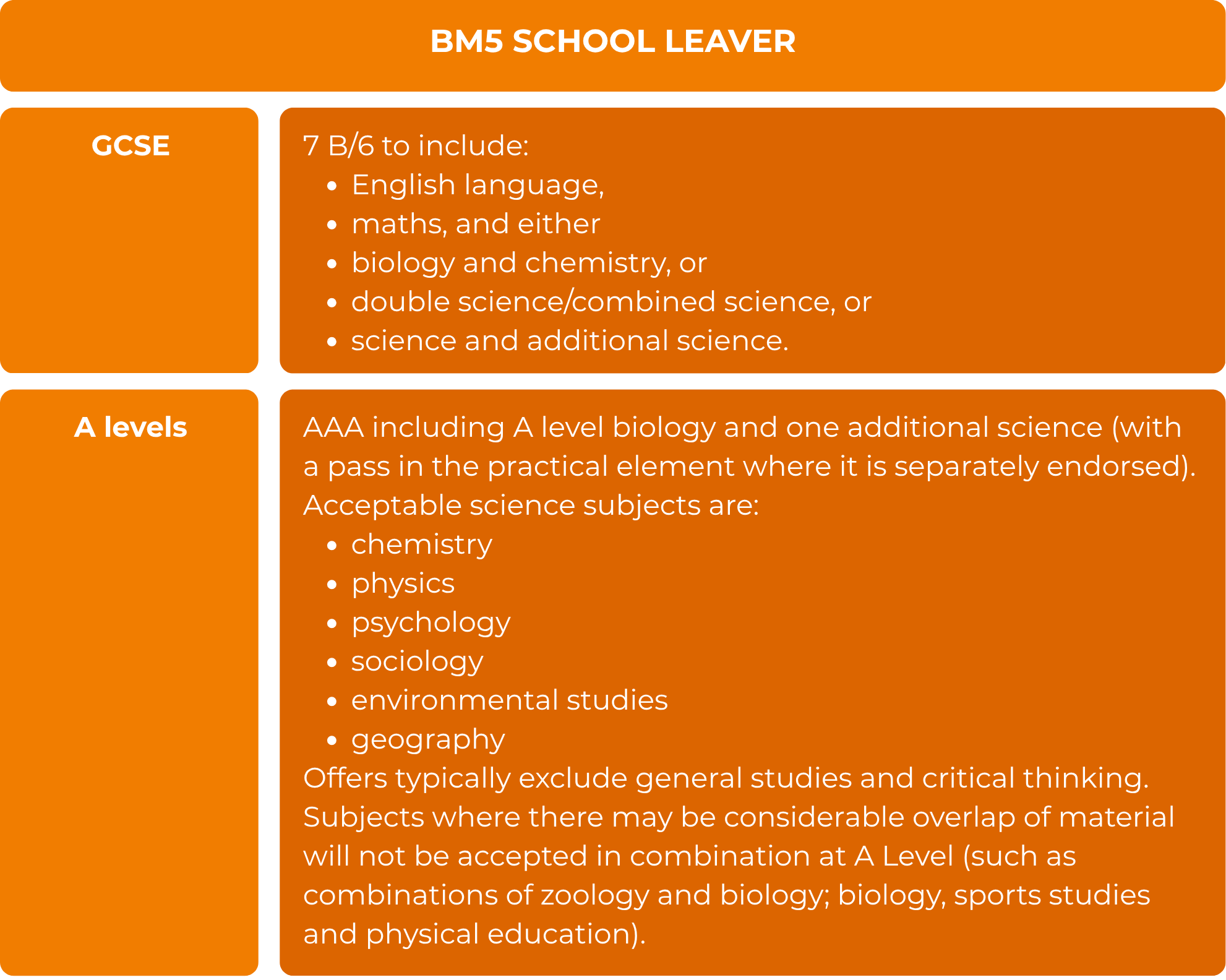

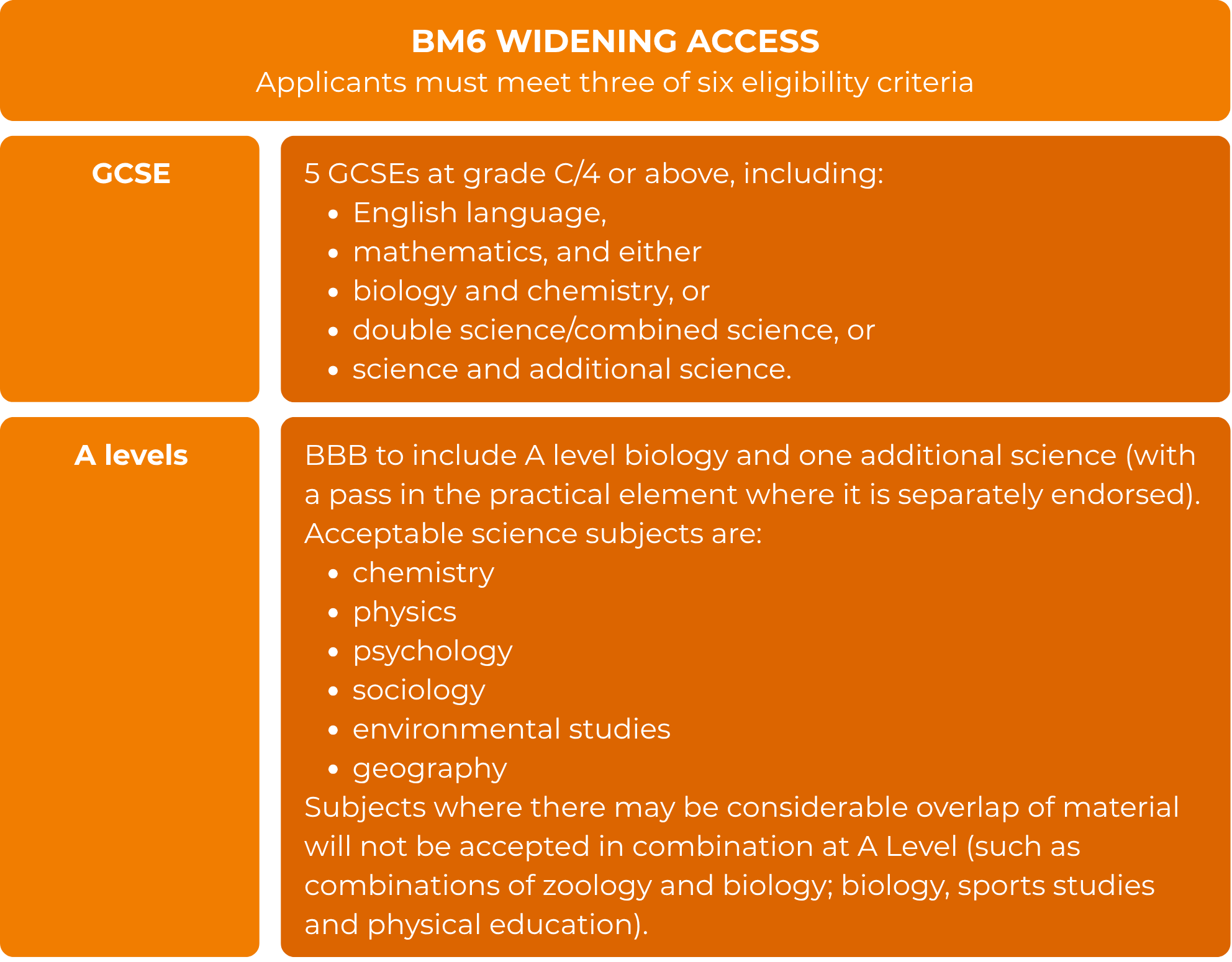
BM6 eligibility criteria
Students study for an extra year on a specifically designed Year 0. In order to be eligible for the programme, applicants should ensure that they fulfil three of the following eligibility criteria:
- first generation applicant to Higher Education.
- parents, guardian or self in receipt of a means tested benefit.
- young people looked after by a Local Authority.
- in receipt of 16-19 bursary or similar grant.
- resident in an area with a postcode which falls within the lowest 20% of the IMD (Index of Multiple Deprivation), or a member of a travelling family.
- in receipt of free school meals at any time during GCSE Years (normally for a minimum period of at least one school term/2 months).
Where an applicant chooses the Free School Meals criterion and the 16-19 bursary criterion, the 16-19 bursary must be awarded for something other than Free School Meals, such as transport costs between home and college, text books, stationery, etc.
Applicants should normally only submit eligibility criteria relating to one postcode/address and this is expected to be the address listed on the UCAS form. The IMD score will be checked and verified by the Faculty of Medicine. Parental/guardian means tested benefits will not normally be considered for mature employed applicants over the age of 21.
Work experience
We are looking for applicants to be able to demonstrate how they meet our non-academic requirements, see below, at interview through their various experiences. These experiences do not have to necessarily be within a medical setting but can be drawn from:
- employment
- volunteering
- work experience
- life experience
- extracurricular activities
We want to see what you have learnt from an experience, what skills you have gained and how you think these can be applied to studying medicine and later becoming a doctor.
Non-academic criteria
In addition to academic entry requirements, the selectors will look for evidence of non- academic criteria during the selection process. Applicants must be able to show they:
- are self -motivated and resilient.
- have reflected on and learnt from life experiences (this may include work experience, paid employment and personal experiences both in and outside health and social care settings).
- can communicate effectively.
- are able to interact successfully with others.
- can demonstrate an understanding of the values of the NHS Constitution.
Clinical skills
Refresh your memory of some of the skills you tried during the course.
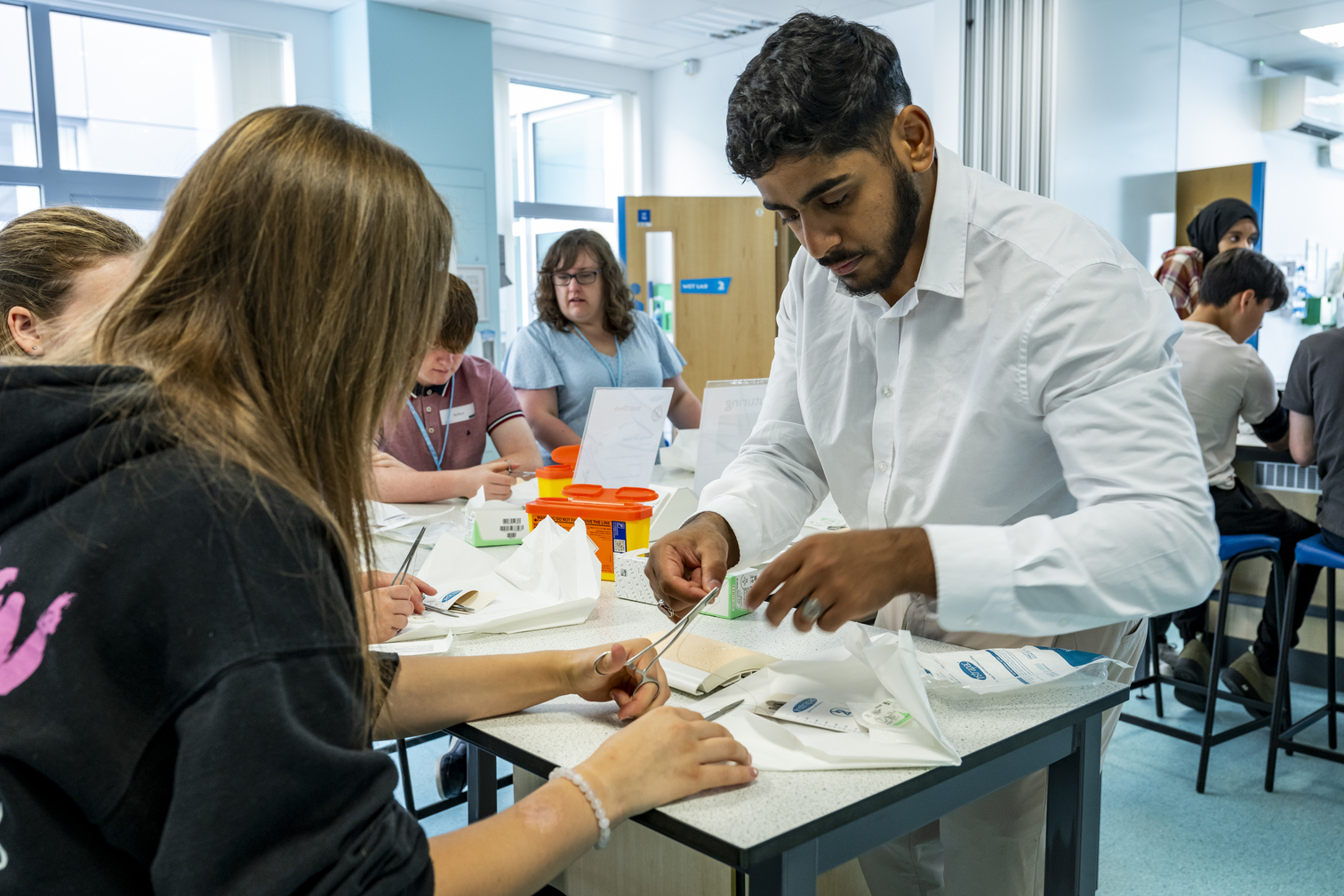
Suturing
After injury or surgery people will often require a surgical suture in order to hold the body tissue together. A special needle with medical thread attached is used in order to sew the wound closed. Some smaller or more superficial wounds may be glued or simply held together by steri-strips.
This video shows a type of suture that can be used, it is known as ‘simple interrupted’. The video shows the removal of the stitches too.
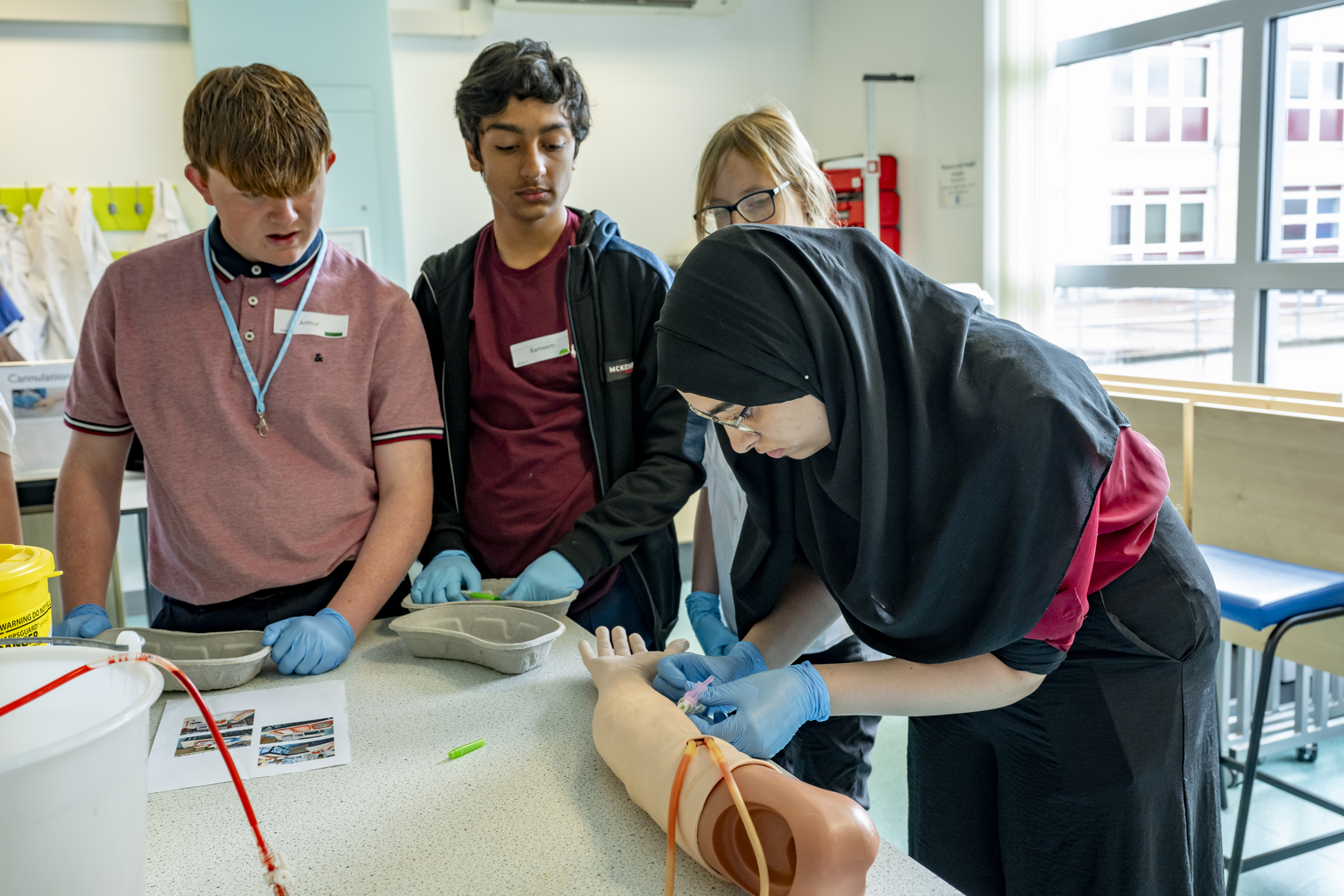
Cannulation
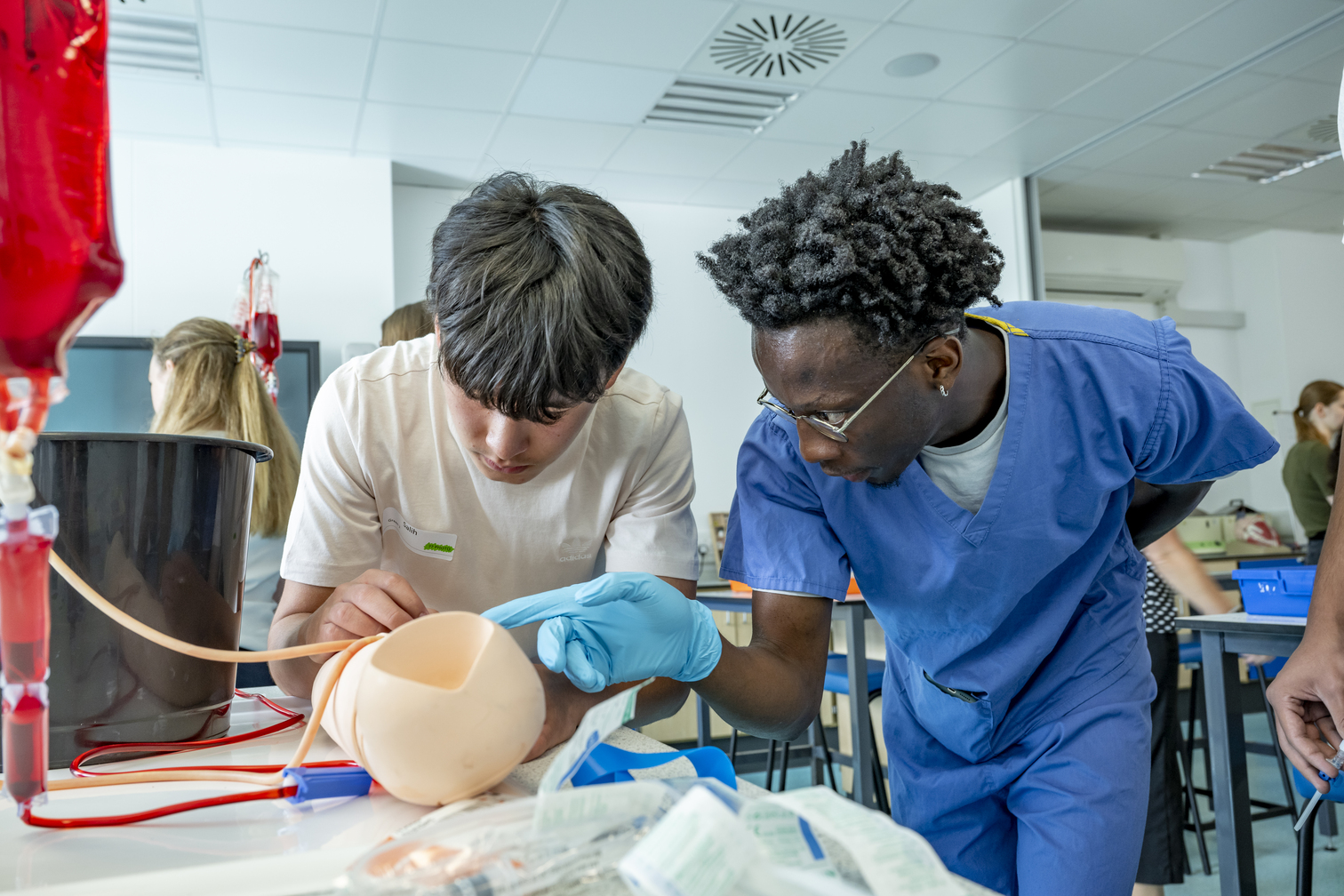
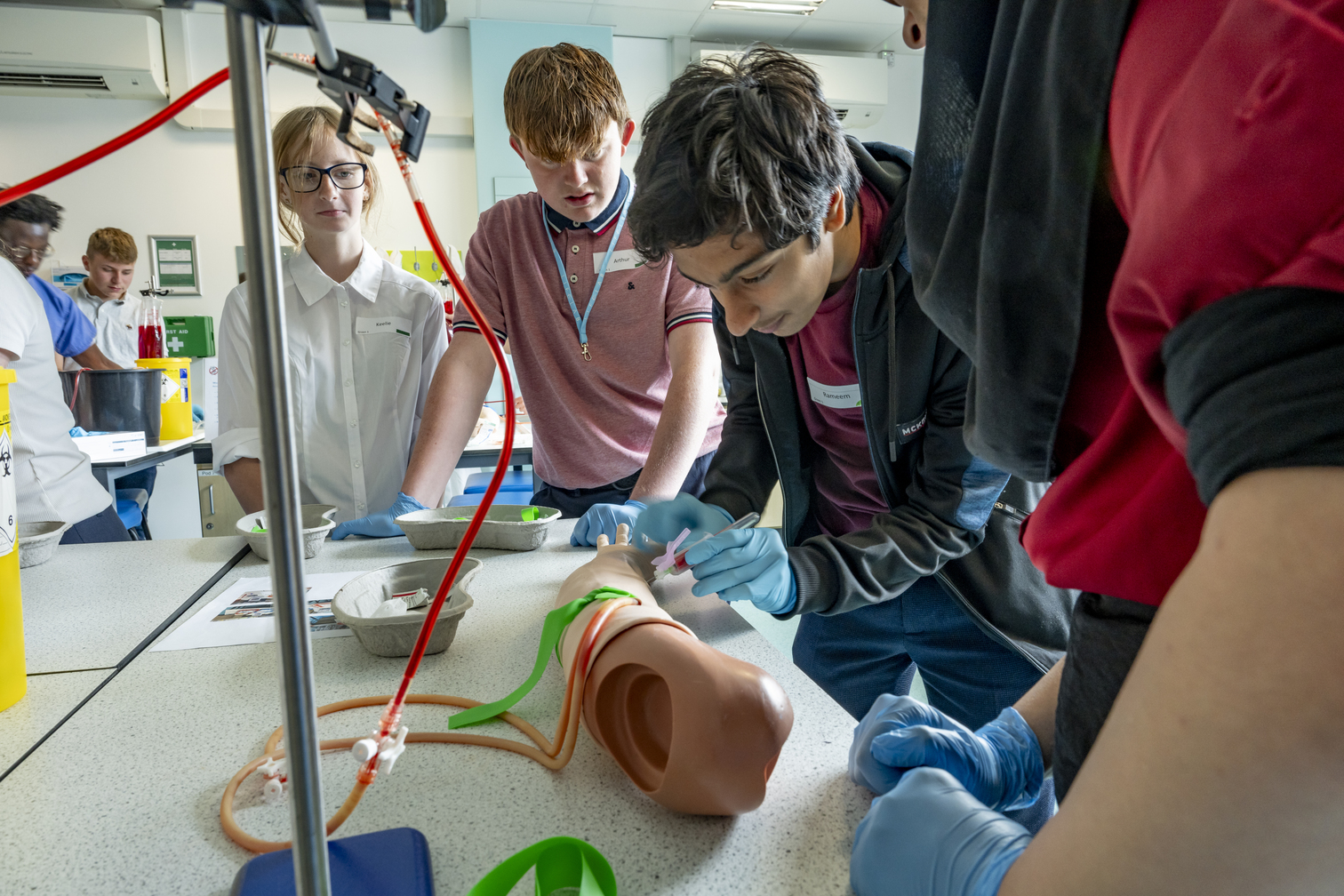
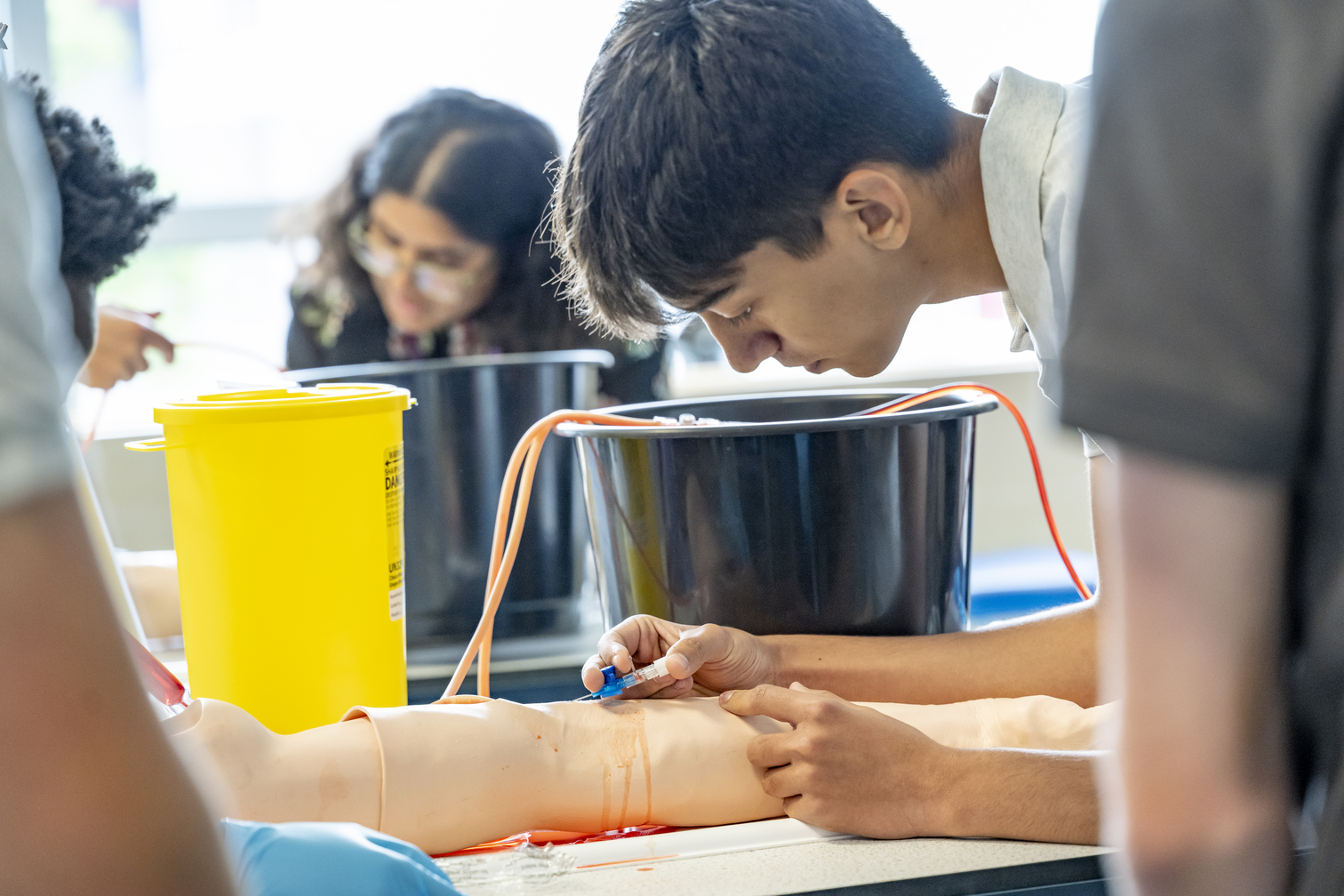
This is the process of inserting a cannula (a small plastic tube) into a peripheral vein. This allows healthcare professionals to easily take blood samples, administer fluids or take fluids whilst the patient is wearing it.
This video shows how to insert a cannula, there is a choice of whether to watch this process being carried out on a living person, or on a fake arm.
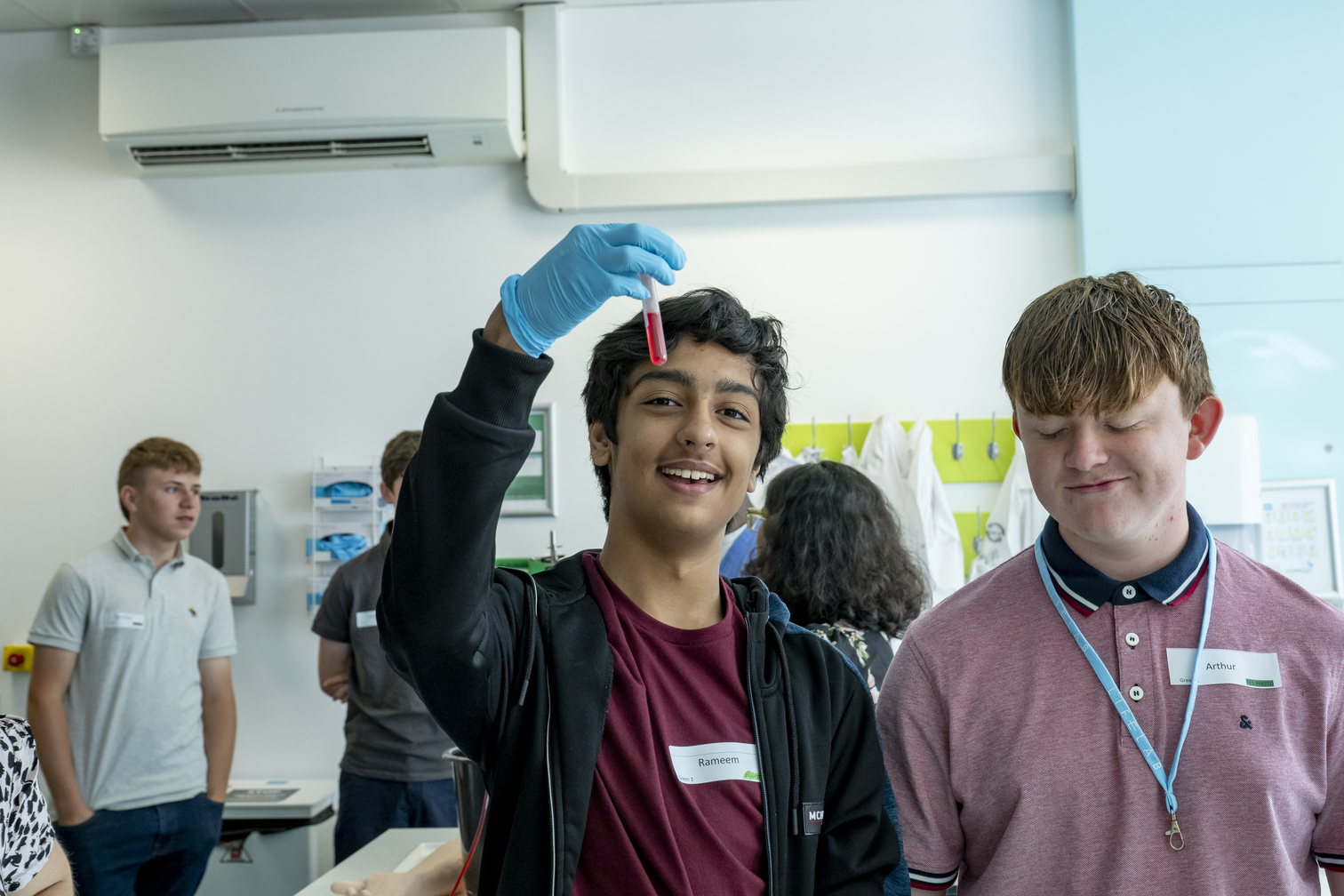
Taking blood
Taking bloods is a fairly routine process that is carried out for a variety of different tests. It involves inserting a hollow needle into a superficial vein (often in the forearm) and allowing the blood to flow into collection bottles.
This video shows you the processes, there is a choice of whether to watch it being performed on a live person or a fake arm.
Trauma scenario
This video was shown at the course and a discussion panel was held with a selection of experts.
WARNING: Whilst everything you will see in the video is set up, some scenes may be distressing and show images of a graphic nature that could make individuals feel uneasy or unwell. Please view with caution and if you are negatively affected by the video, then stop watching.
VIDEO can’t be played on other websites!
Gallery