Category: News

  • Opening doors: How LifeLab makes work experience work for everyone

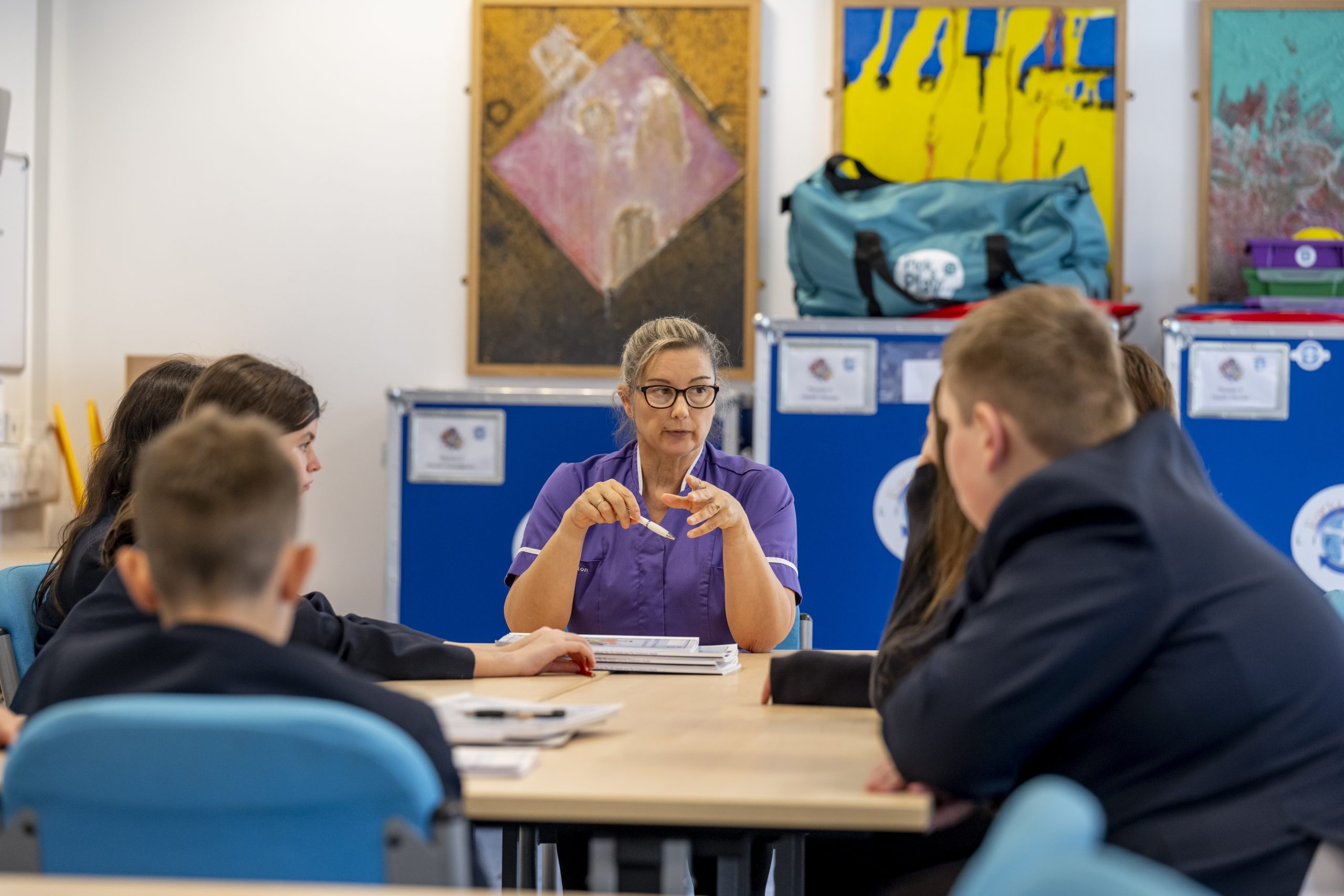
    When a work experience request lands in your inbox, it often means risk assessments, safeguarding paperwork, insurance forms, and a full week of supervision. For researchers already juggling experiments, deadlines, and teaching, the administrative burden can be overwhelming.

    Our traditional model has unintentionally created inequalities. Students with family connections in research can more easily secure placements – when a request comes from a friend or colleague, you’re more likely to see past the hassles and find the time to help. Meanwhile, other young people who are equally curious and capable, but don’t have parents who know researchers personally or feel comfortable asking for favours, struggle to find opportunities. For young people without that social capital, there is no easy way in.

    A better way forward

    A few years ago, the Faculty of Medicine developed a new approach to make work experience fairer and more manageable. The intention was to create a smoother, more equitable system where any young person could access opportunities, regardless of who they knew. At LifeLab, we’ve taken this further. For any young person who’s taken part in one of our programmes, whether that’s a school visit, our Experience Medicine summer school, the Youth Panel, or NxtGen Researcher programme, we act as the host for their work experience week.

    What this means for researchers

    • LifeLab takes care of risk assessments, insurance, and safeguarding, so you don’t have to navigate the paperwork.
    • you only commit to one or two days, not a full week – just enough to give a young person a meaningful glimpse into your work.
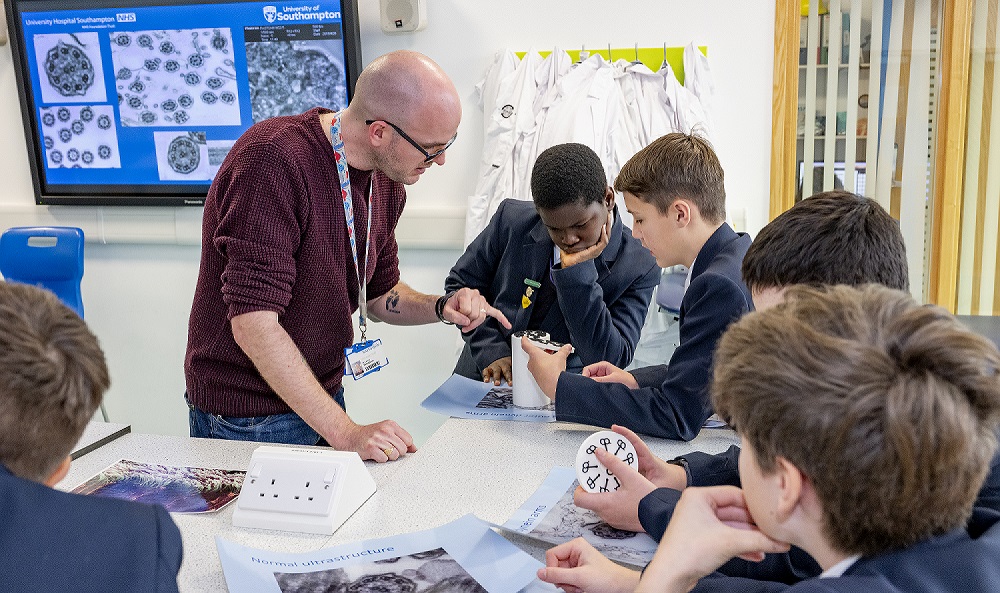
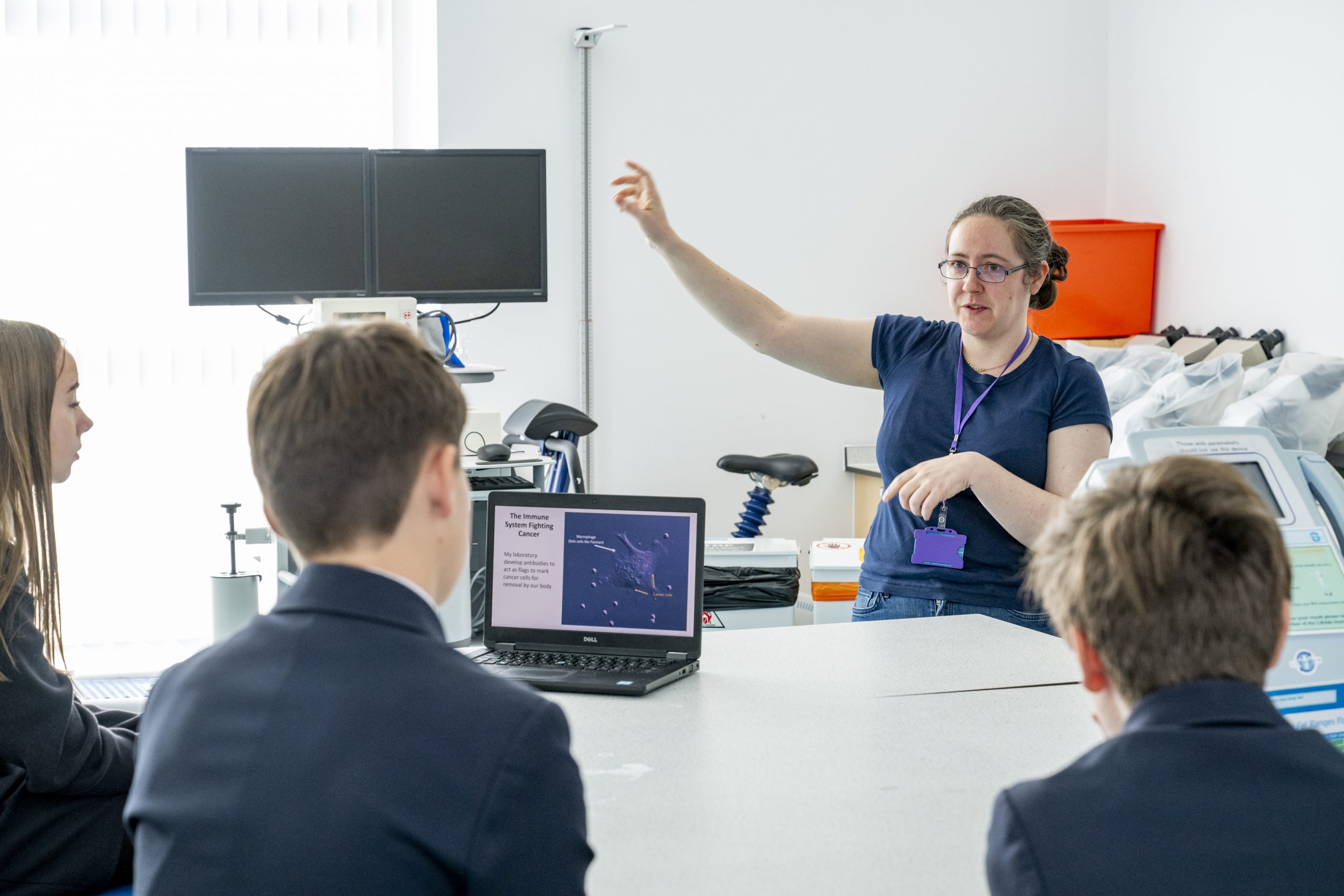
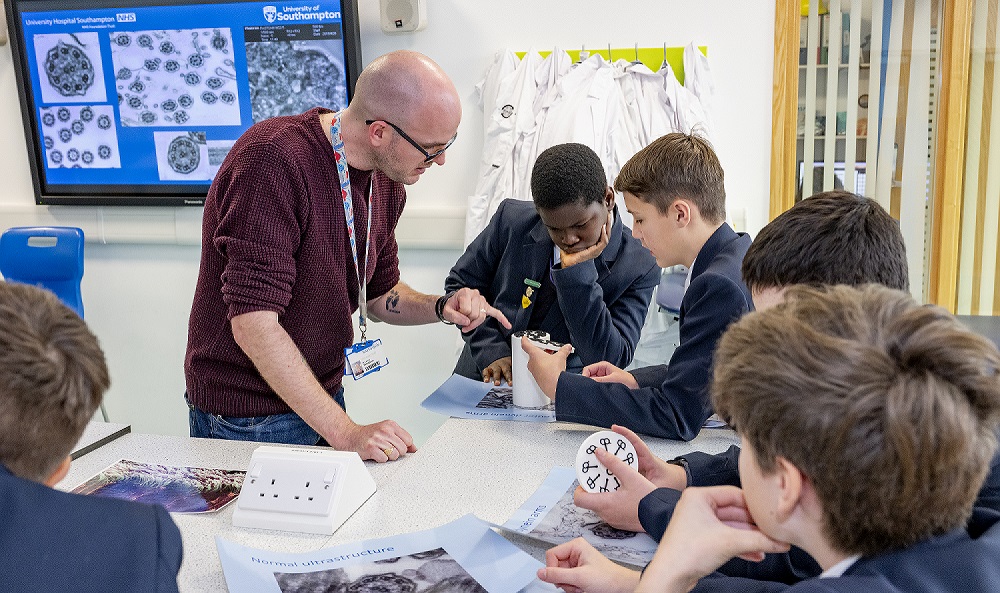
    • each student experiences five different placements across their week, perhaps a day in a cancer research lab, another exploring imaging techniques in the Biomedical Imaging Unit, a session on health communications, or helping out at LifeLab.

    This structure gives students breadth and researchers flexibility, a model that works for everyone.

    Why this benefits everyone

    At 14 to 16 years old, most young people don’t yet know what kind of science excites them. Experiencing a range of disciplines helps them see that research isn’t just lab coats, it’s also data analysis, communication, and community engagement.

    Real impact on students

    Feedback from students has been overwhelmingly positive. All rate their experience 4 or 5 out of 5, and many say it’s changed how they see their future, encouraging them to think about careers in healthcare professions and research.

    Impact on researchers

    Explaining your work to someone discovering it for the first time can be genuinely energising and watching that spark of curiosity ignite in a young person’s eyes is a powerful experience.

    How to get involved

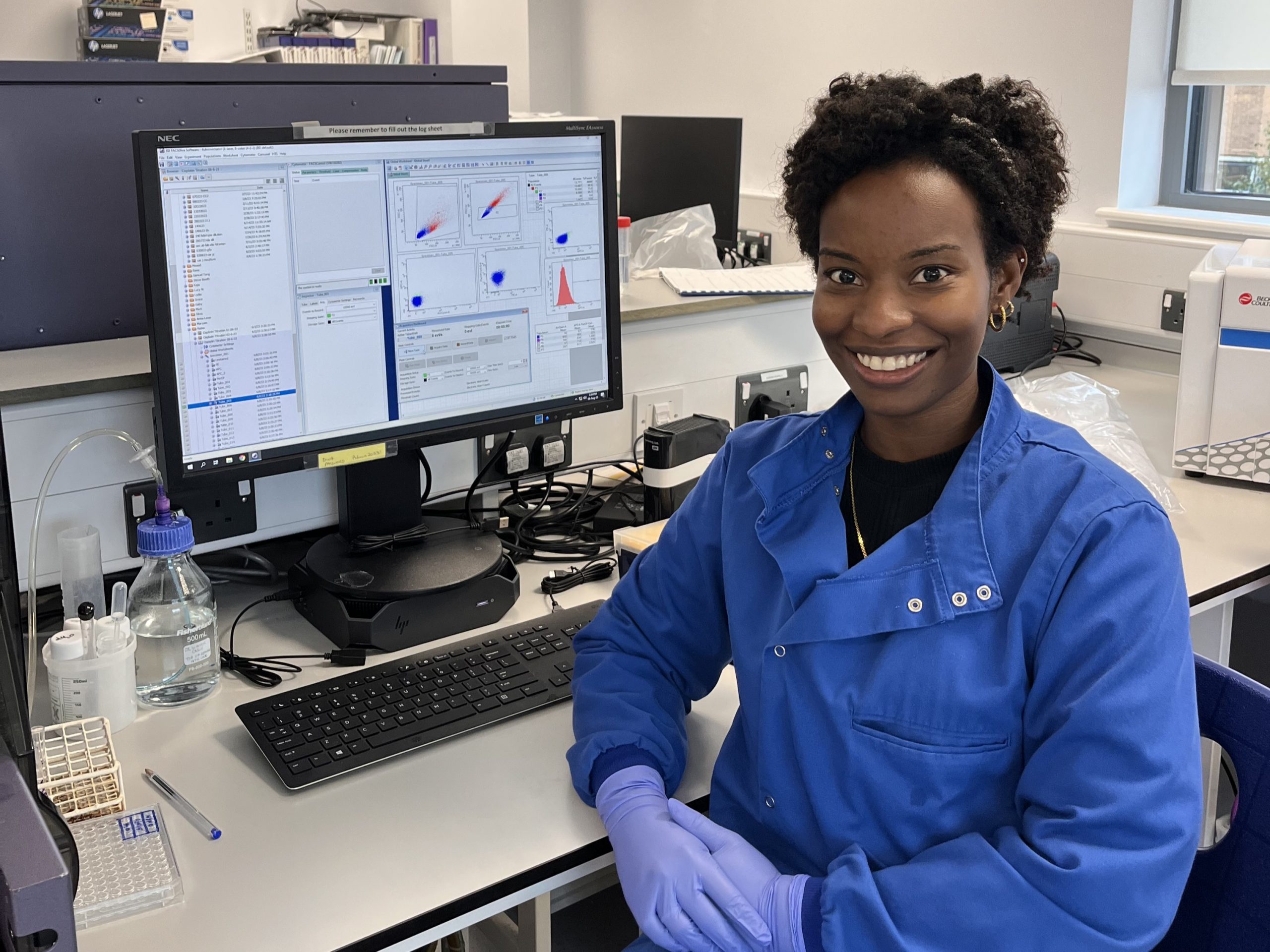
    If you work at the University of Southampton or University Hospital Southampton, getting involved is straightforward. We’ve had researchers, communications teams, technicians all host students, anyone can take part! If you fancy offering a young person an opportunity and want to showcase the work you do, here’s how:

    • let us know you’re open to hosting a LifeLab work experience student for one or two days, email us at lifelab@soton.ac.uk.
    • LifeLab handles all the admin and coordinates the week
    • on your day, you collect your student from LifeLab, show them your work, and bring them back at the end of the day

    If you’d like to host a student independently, you can still do so via the Faculty of Medicine’s work experience process – ensuring every young person has access to meaningful, safe opportunities in research and healthcare.
  • Board game helps young people manage work-life balance

    Board game helps young people manage work-life balance

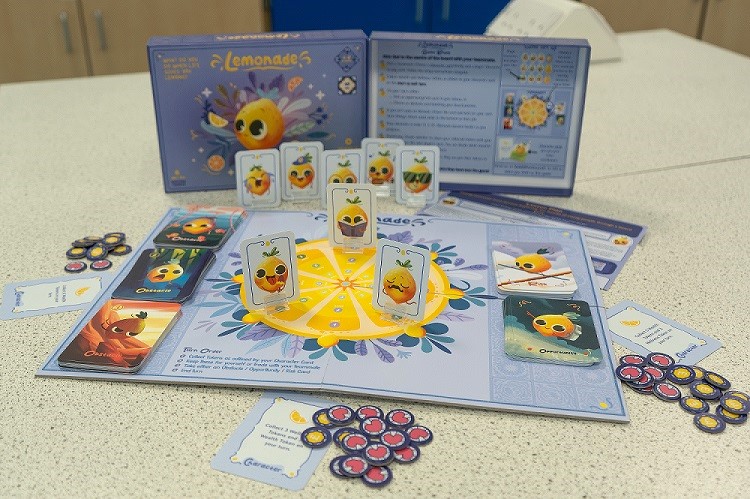
    Lucy Jones, as part of her work experience with LifeLab, has written this blog about a new board game for young people. Lucy interviewed Cara Black, a PhD student at the University of Southampton, to find out how and why she developed the game ‘Lemonade… when life gives you lemons’.

    The game, based on reality, shares key life lessons in a fun way. It encourages young people to consider balance in their life, promoting healthy living and attitudes towards their future. Cara worked with Craig Hutton, Mary Barker, Vanissa Wanick, Adam Watts and Kathryn Woods-Townsend to make the game. This project was funded by the University of Southampton along with the NIHR ARC Wessex.

    Enjoyable education

    Cara says the heart of the game is enjoyable education. She says it teaches young people core messages around work-life balance and collaboration, in an exciting and captivating way. It also makes space for conversations about this.

    Young people play as partners, which creates different playstyles. It shows them how leaning on those around you can help you achieve your goals.

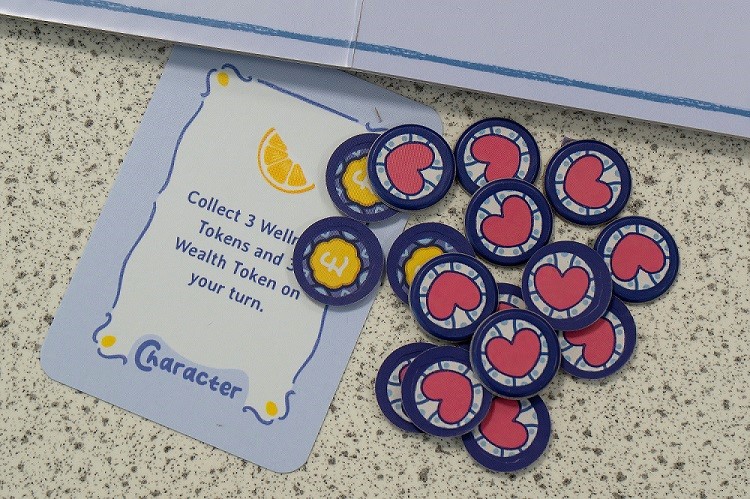
    Wellness and Money tokens act as the currency in the game, helping players move past obstacles. Increasingly difficult Obstacle cards help teach resilience. These show that while hardships in life are unavoidable, they are not impossible to overcome.

    Players also can choose a Risk or an Opportunity card. This illustrates the split between adventure and comfort that they may experience in real life.

    Overall, Lemonade encompasses hard life lessons, light-heartedly. It leaves room for young people to start to think about and apply these lessons to their own lives.

    Creating the design

    Cara says that when people are well supported in aspirations, they are more likely to achieve them. The game therefore seeks to empower young people to consider their future aspirations.

    The developers took inspiration from a scenario forecasting tool called Plausible Futures. This was designed by Craig Hutton at the University of Southampton, and adapted by the LifeLab team to support young people work out their priorities and aspirations for the future. The choices they face in the game are between working and earning money to overcome life’s challenges and looking after their health and wellbeing.

    The team worked with graphic designer Kristina Tsenova and game developers to create Lemonade. Cara says Kristina was very helpful during this process, creating some incredible designs for Lemonade.

    Tested by school students

    The team have tested multiple versions of the game in schools around the UK. Taking on students’ feedback, they have now improved the dynamics and design. Cara found the response was very positive, as the young people enjoyed the game and engaged with it. They also understood the core messages quicker than she expected. She says this included that “their aspirations and goals are important, and that it is good to balance what you already have.”

    She also hopes that the collaboration element of the game will stand out to young people, due to its uniqueness and importance in everyday life.

    This testing demonstrated the effectiveness of Lemonade in encouraging young people to consider the necessity of balance throughout life and the importance of their aspirations.

    Playing the game at your school

    Cara says the team would now like to reach as many schools as possible. They aim to share it with at least 40 schools, to promote aspiration among young people.

    The game is designed to be played during PSHE lessons. It facilitates conversations and engagement about the future motivations young people may have.

    Please email lifelab@soton.ac.uk if you are a teacher at a school in the Southampton area interested in borrowing the Lemonade board game to play with your students.

  • Autumn term 25-26 newsletter

    Autumn term 25-26 newsletter

    Take a look at our Autumn term LifeLab newsletter to find out what we’ve been getting up to, and discover the opportunities and events we’ve got coming up this term.

  • LifeLab summer school boosts young people’s dream of becoming doctors

    LifeLab summer school boosts young people’s dream of becoming doctors

    Aspiring medics joined our LifeLab summer school to gain hands-on experience and support their university applications.

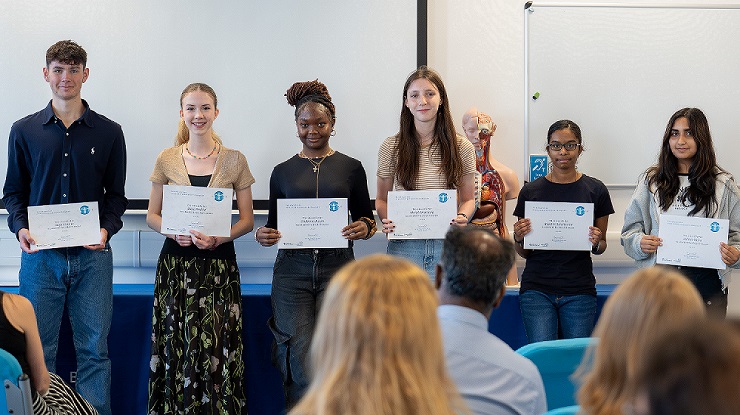
    We welcomed 39 young people from across the UK to LifeLab on the 23rd and 24th July for our annual summer school. They explored the world of medicine through hands-on experience, tours and expert insights. They also received tips on how to make their application for medicine stand out from the crowd.

    Developing new skills

    Experience Medicine with LifeLab is a two-day course during the summer holidays for students in years 9 to 11 who are interested in studying medicine at university. LifeLab have run it every year since 2013, in collaboration with professionals at the University Hospital Southampton the University of Southampton’s Faculty of Medicine.

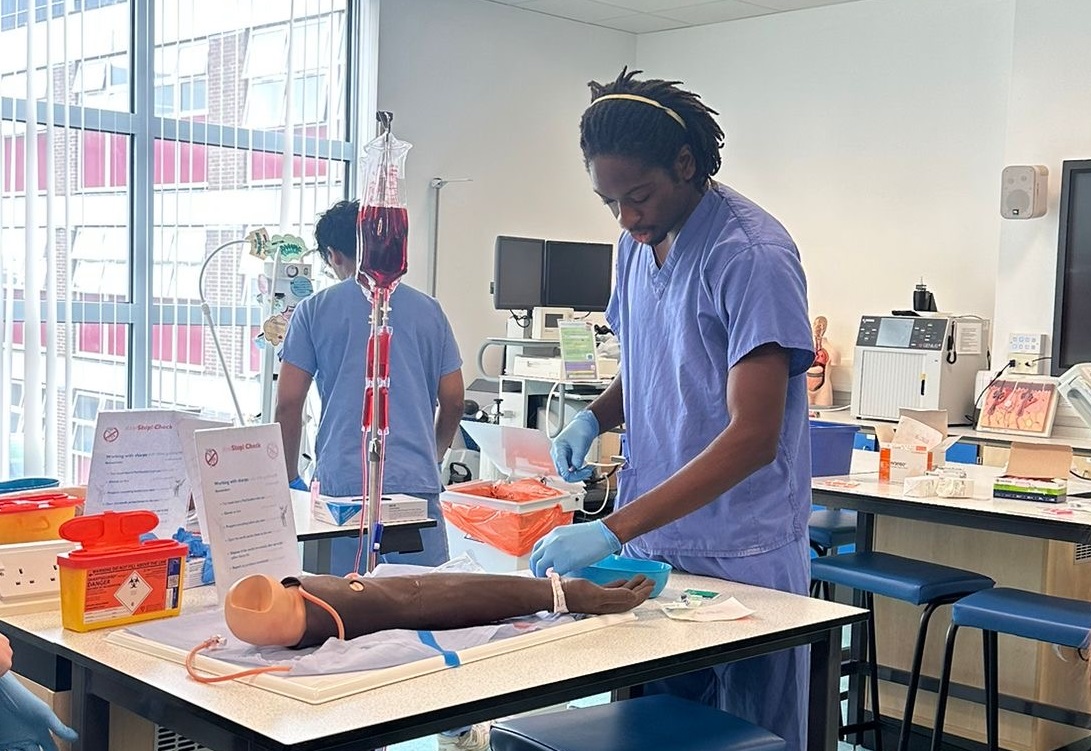
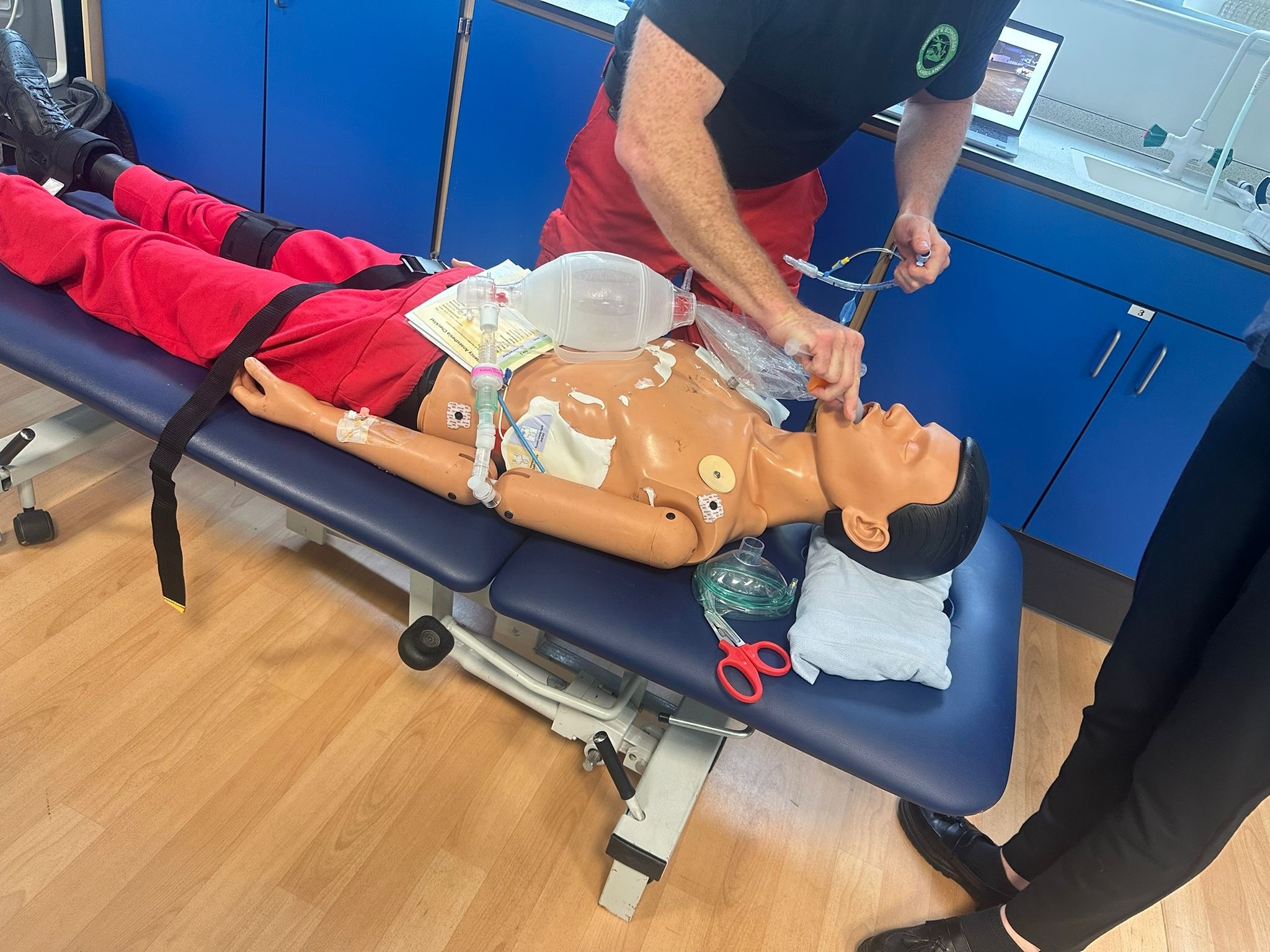
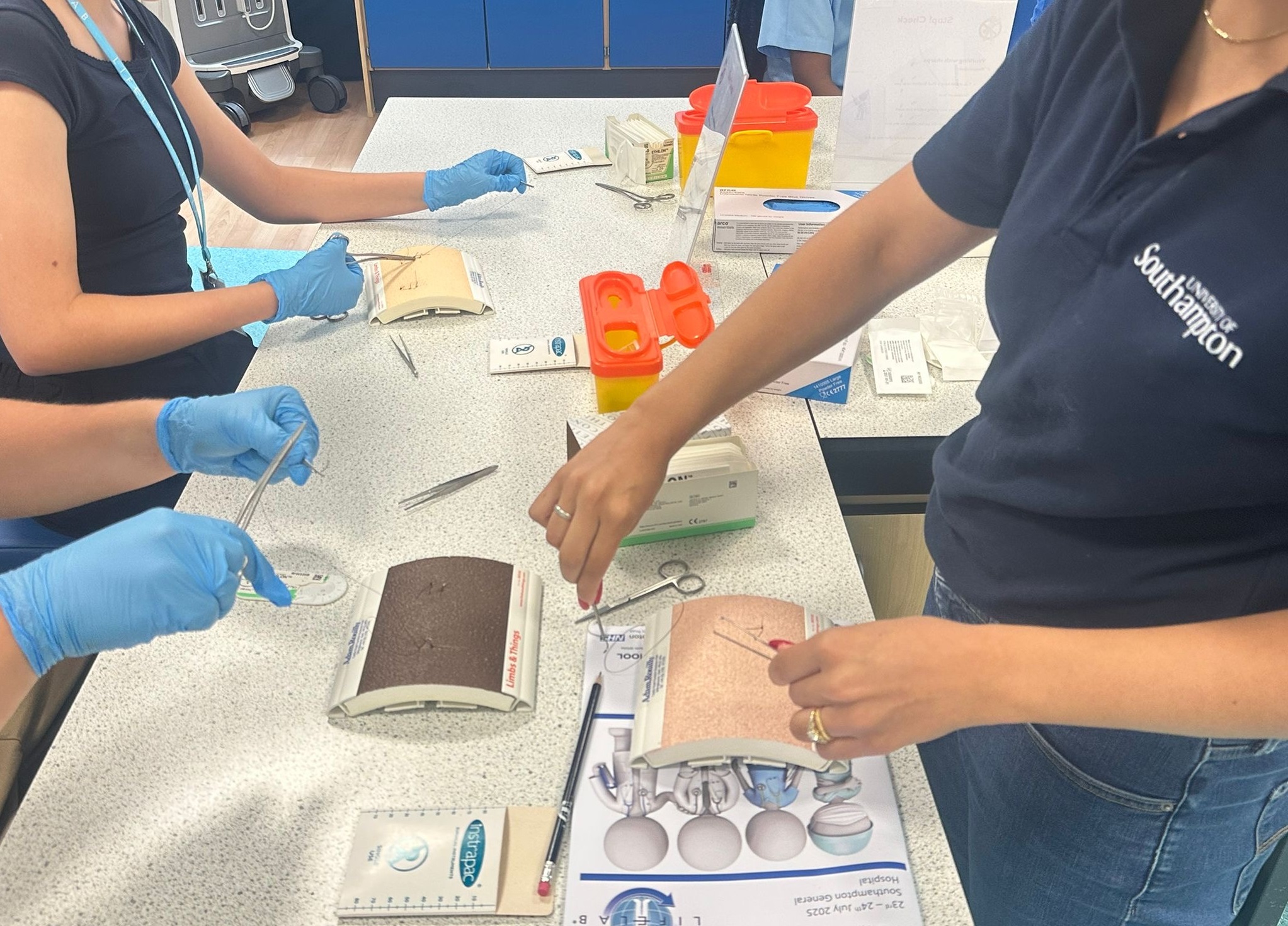
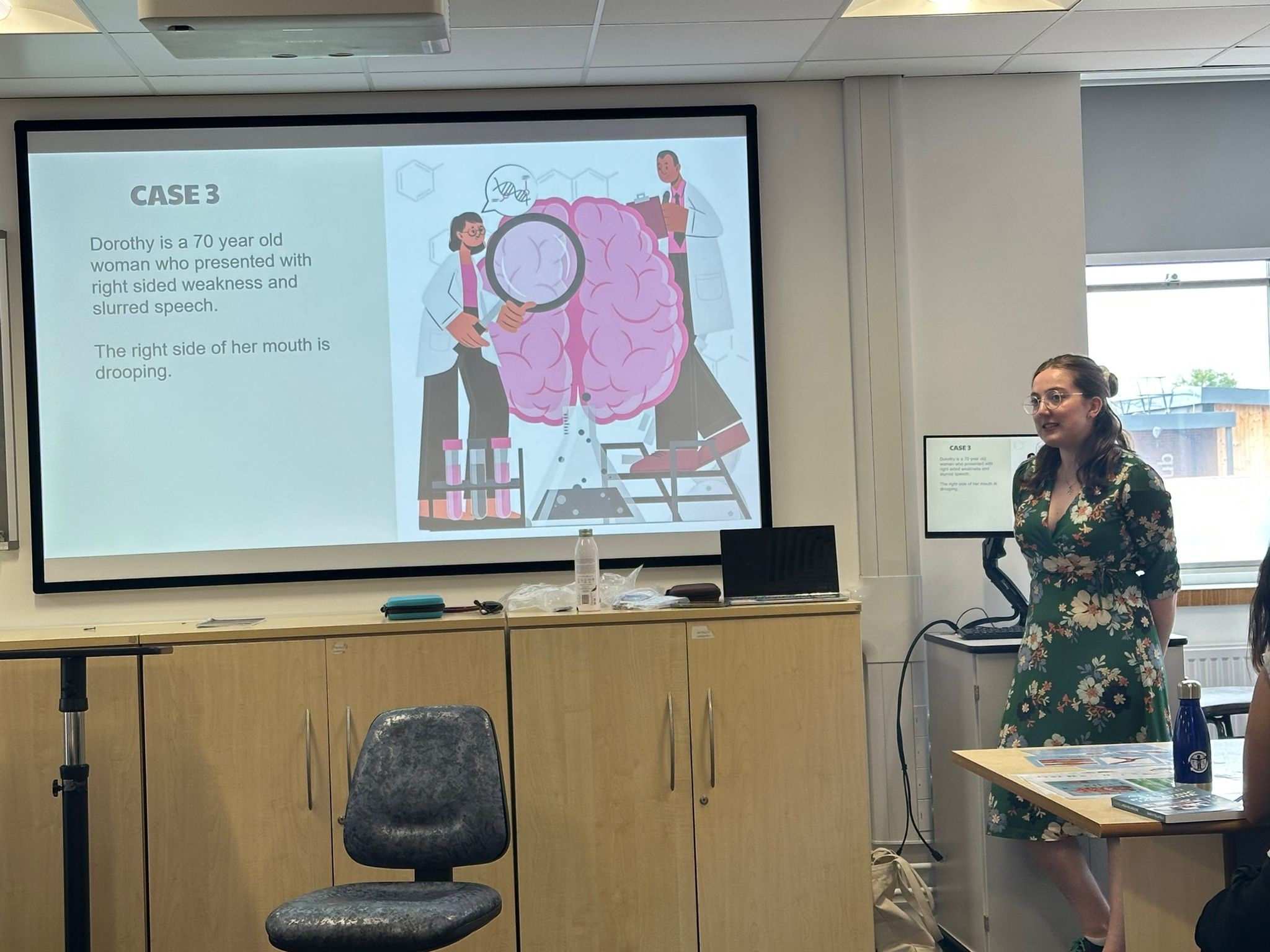
    This year’s attendees had the opportunity to gain experience practicing clinical skills. They were supported by the Faculty of Medicine’s student ambassadors. The skills included venesection, cannulation, suturing, blood pressure and urine testing. Paramedics Ben Channon and Neil Bizzell from the critical care team’s ambulance service trained them how to respond to a trauma scenario, where someone has been injured. They also had to use their knowledge of anatomy to work through a series of patient case studies and try being a ‘medical detective’.

    Seeing the hospital

    After an introduction to research, the students were given a tour of our NIHR Southampton Clinical Research Facility by Lisa Berry, Lead Research Matron. This gave them an understanding of how doctors run medical research trials and studies to improve the care given to patients.

    Attendees also had a tour of the hospital’s Acute Medical Unit by Dr Ben Chadwick. This gave them the chance to learn more about how our doctors treat patients on the wards.

    Useful tips and advice

    Current medical students shared what their typical day looks like. They also answered questions from attendees about their experience.

    We heard an inspiring keynote from Dr Stephen Downey, who talked to the students about his unconventional route to university, and how he over came challenges to achieve his dream.

    The course finished with a session run by the Faculty of Medicine’s admission team, which parents or guardians could attend. This gave useful tips and insights on how to apply to study medicine at the university.

    This was followed by a Q&A session, where the students and their families could ask the team questions about the admissions process.

  • Young people’s recommendations to shape a Youth Voice Service in Southampton

    Young people who live, study or work in Southampton have given their recommendations on what a Southampton Youth Voice Service should include.

    Sixteen young people on the NxTGen Young Researcher Training Programme and academics from the University of Southampton were commissioned by Southampton City Council and the Southampton Place Partnership to produce a set of recommendations for a Southampton Youth Voice Service. The group of young people were from a range of backgrounds and experiences including young carers, neurodiverse young people, and those with special education needs.

    The recommendations cover a range of issues affecting local young people, from improving school communication with parents to giving young people a chance to input into what their spaces look like, to addressing disparities between private, public, and home education, to highlighting the need for diverse sports and cultural activities.

    The group have presented the project and the recommendations in a report: Co-Creating Tomorrow – Our City, Our Say: Report and Recommendations of the Southampton Youth Voice Project.

    The NxTGen programme, which is co-developed and hosted by the University of Southampton’s LifeLab, aims to develop research and advocacy skills in young people, equipping them with tools to support their academic and employment journeys and beyond.

    The group carried out their research projects, including surveys and interviews with their peers, patients and professionals, into what a Youth Voice Service could look like and how young people’s voices should be included. They held a co-production day with council representatives, NHS staff and other regional charities and community groups to discuss their research and co-create a set of recommendations to develop the service.

    Feedback from the young people taking part has been overwhelmingly positive.

    The Southampton Place Partnership, coordinated by Energise Me, aims to remove the barriers people face when trying to be more active and support people in the city to live more active lives.

  • Using theatre to explore complex and sensitive health issues

    Using theatre to explore complex and sensitive health issues

    Researchers at the University of Southampton and a theatre company are exploring how ‘verbatim theatre’ can start conversations, share experiences and influence policy decisions related to people’s health. Verbatim theatre is a form of documentary theatre where plays are created using the exact words spoken by people in real-life interviews or documented sources.

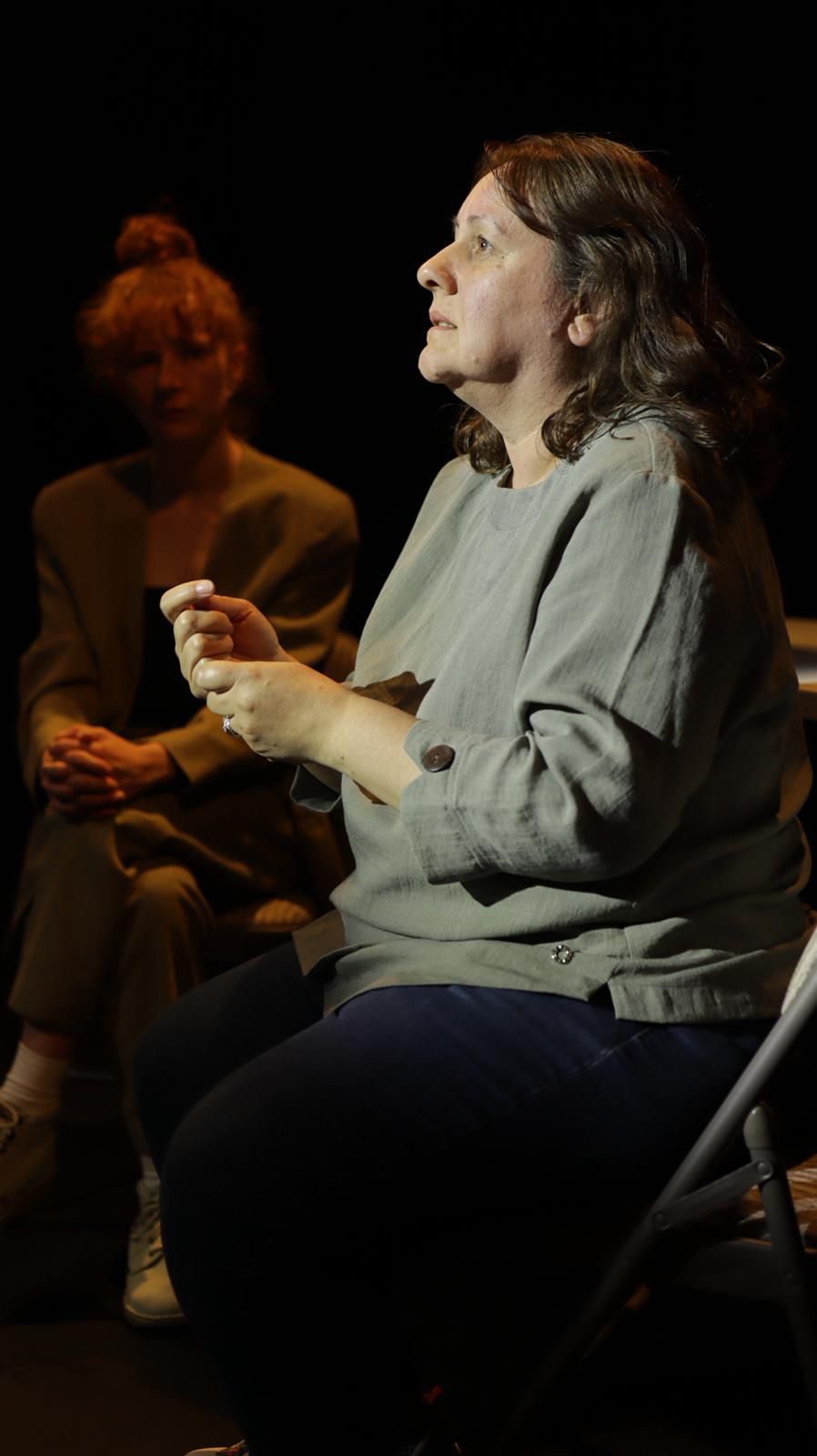
    Theatre for Life’s performance The Feeling (of knowing something is wrong, but it isn’t), at Mayflower MAST Studios, explored female hormonal health and gender identity experiences. It was created using hundreds of voices from focus groups taking part in a University of Southampton research project, ‘From Puberty to Menopause’. Participants were at different stages of their hormonal lifecourse (puberty, motherhood, infertility, and menopause), and discussions with LGBTQIA+ people and the perspectives of teenage boys and men aged 14+ were also included. Participants shared their experiences and how they’ve shaped their lives and identities.

    At its core, the play is a cry for help from a community of voices who have felt silenced. The performance aimed to increase understanding around female reproductive health care and LGBTQ+ health care inequities, as well as generate discussion around the language we use to make healthcare in Southampton and England not just accessible, but equal to all.

    After the performance, policy makers, healthcare professionals, the cast and the audience discussed the topics raised and how they can be used to tackle health issues in Southampton and across the south.

    Among the audience were students from Upper Shirley High School, some of whom had never been to the theatre before.

    ‘From Puberty to Menopause’ was a multidisciplinary project at the University of Southampton involving LifeLab, the Faculty of Medicine, the Faculty of Arts and Humanities and the Faculty of Environmental and Life Sciences, funded by Public Engagement with Research, the Interdisciplinary Fund and Southampton Institute for Arts and Humanities.

    The Feeling (of knowing something is wrong, but it isn’t) was supported by the Propel Associate Artist Programme at Mayflower Studios and Young Southampton. Theatre for Life is now planning to take the production on tour to connect with wider audiences throughout the South.

  • Evaluating Early LifeLab: How can we make it even better for primary school children?

    Evaluating Early LifeLab: How can we make it even better for primary school children?

    Morgan Mason is seeing if our Early LifeLab programmes are achieving their aim of giving primary school children what they need to make healthy choices.

    LifeLab for young children

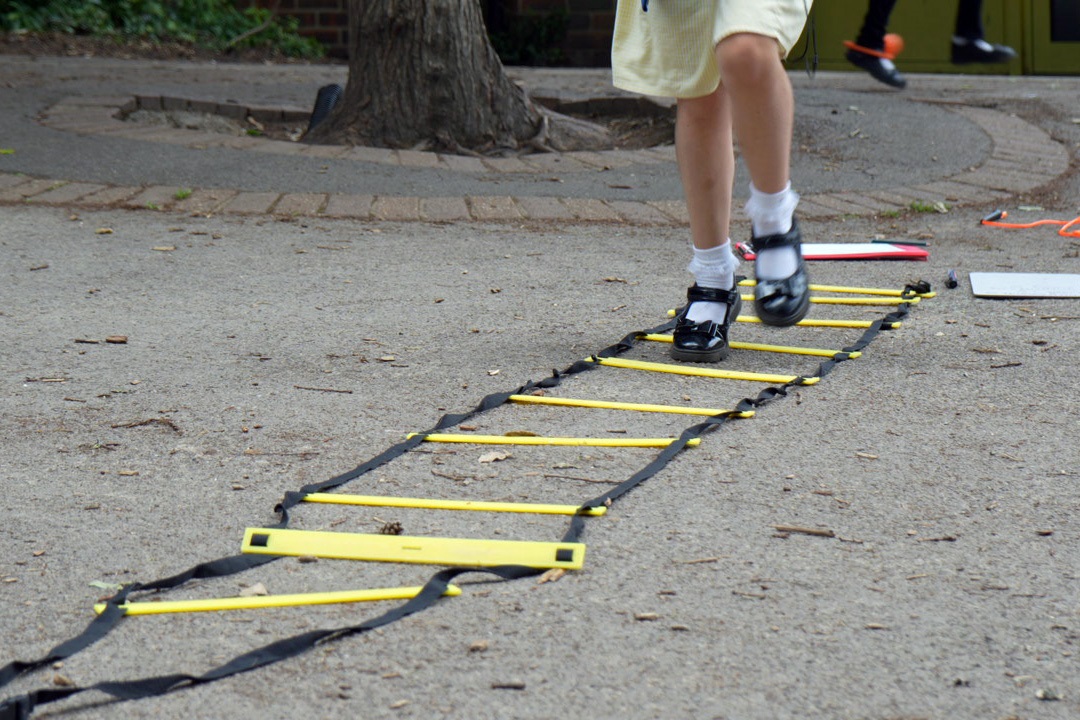
    While secondary school children visit our LifeLab facility at University Hospital Southampton, we take a different approach for primary school children. We send out ‘flight cases’, huge boxes on wheels, to primary schools. These are filled with all the equipment and instructions they need to complete our Early LifeLab activities. In this way, the children do the Early LifeLab activities with their teachers at their own school. This means they complete our modules with familiar people in a familiar environment.

    We offer our Early LifeLab modules for students in Reception and years 2, 3 and 6. The activities are tailored to each year group, ensuring they are appropriate for each age.

    Early LifeLab does more than just tell children what they need to do to be healthy, as this is not enough to change their behaviour. They also need ‘self-efficacy’ – the belief that they will be able to do it. They get this by experiencing it.

    Morgan’s journey from America

    Morgan and her partner emigrated in 2019. She says that nutrition, health and exercise have always been really important to her, both personally and for her research. Before coming to the UK, she completed a master’s degree in mental health counselling. This explored the effects of nutrition and exercise on mental health, and included work with young people in a mental health facility. Morgan previously worked for the University of Southampton’s Research and Innovation Services. At one of their events, she had the opportunity to meet our director, Kath Woods-Townsend, and learn about LifeLab.

    Completing Remy’s story

    Morgan started her PhD in September 2023, which focuses on evaluating the Early LifeLab programme. Her job is to go into schools before the children begin using the activities, and do a pre-evaluation with them. After they use the activities, she does do a post-evaluation.

    This sounds quite straightforward, until you consider that many children are too young to be able to read or write. The idea is to come up with techniques to evaluate the children that are useful, and will give genuine information from the children at that age. This is quite difficult, because a lot of metrics we use are adult-centred metrics, such as questionnaires. During her PhD, Morgan is therefore working to develop new methods that are more suitable for primary school age children. She wanted to make these contextual, and to gather information in a way that helps understand their perceptions of health.

    For example, she has developed a ‘story completion’ task. In this, the children are asked to complete an unfinished story about a fictional character called Remy going to school. The children are given prompting questions, such as ‘What kinds of foods might Remy eat to feel good?’ and ‘What kinds of exercise might Remy do to feel good?’ to help them complete it.

    Seven schools and just over a hundred children have taken part in the pilot stage of the project. It started at the beginning of 2024 and finished in November the same year. Morgan has used the insights she’s gained from this to refine her evaluation techniques. This has included changing the text for the story completion activity into a comic strip, so children who find it difficult to read can visualise it better. She has also changed it so that they can now choose to complete the story by drawing instead of writing.

    Doing the evaluation

    Morgan is now using these refined methods to complete her evaluation of Early LifeLab. This started at the beginning of 2025, and is due to finish at the end of the Spring term in 2026.

    So far 13 schools and just over 200 children have taken part. She is aiming to have around 700 children taking part overall. The aim is to show that Early LifeLab is doing what it intends to do – give primary school children the knowledge, understanding and ability to make healthy choices.

    Morgan says the evaluation provides an opportunity to talk to teachers to find out how they are using it, and identify any aspects of the programme that could be improved. It could also be used to identify any barriers the children are experiencing, which may prevent them from being able to make healthy choices, such as a lack of access to healthy food.

    Ultimately, Morgan says she hopes that the results from the evaluation might lead to wider changes, such as policy recommendations, that could help more children live healthy lives.

  • LifeLab Showcase celebrates a year of success

    LifeLab Showcase celebrates a year of success

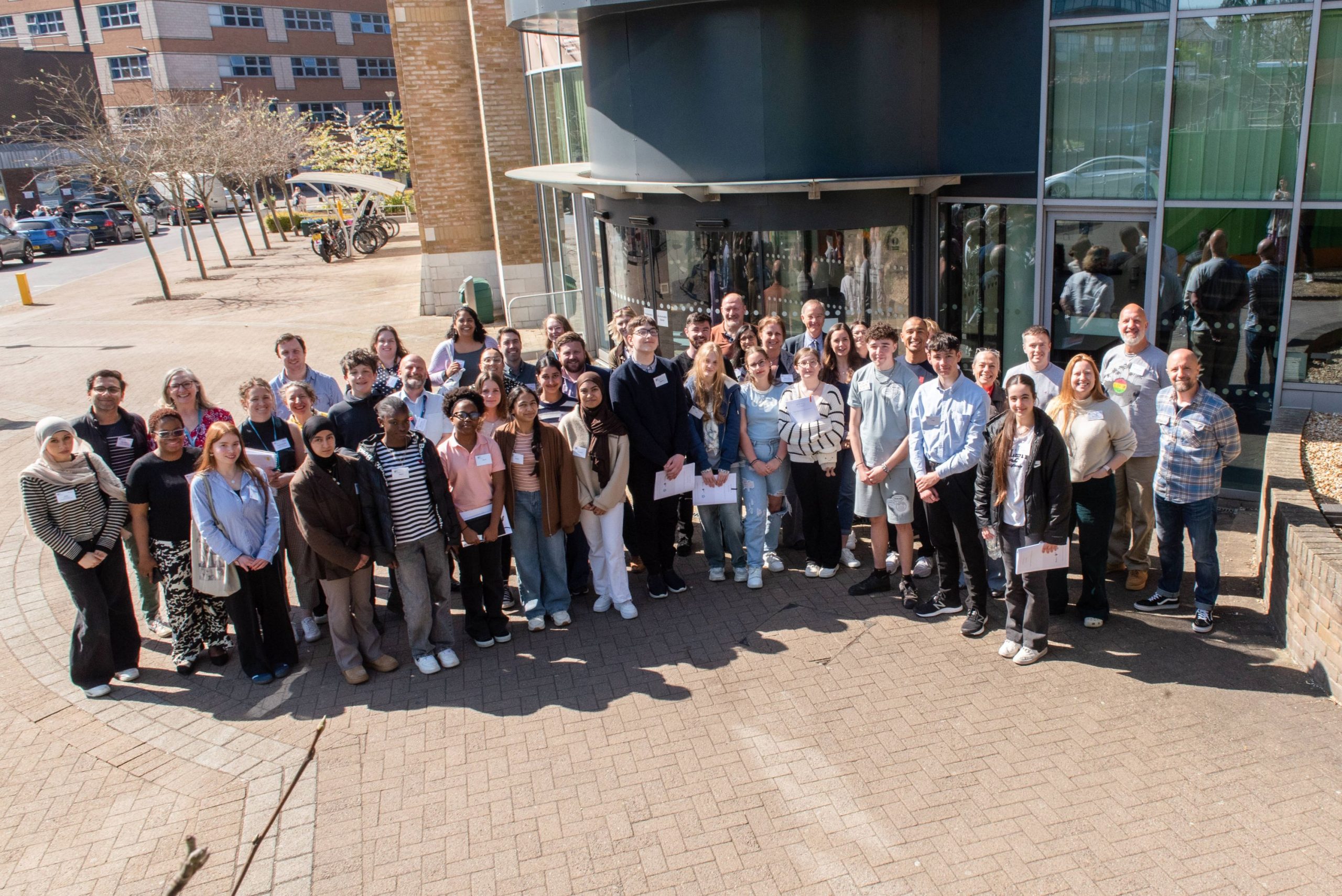
    Young people, teachers, researchers and collaborators came to LifeLab for a vibrant evening of celebration. The 2025 Showcase event took place last week at our LifeLab facility at Southampton General Hospital. This academic year marked some significant milestones for us. Our work was recognised by a Royal Society for Public Health award, and an invitation to a Royal Garden Party. We welcomed our 17,000th student and expanded our Early LifeLab programme for children in primary schools. Our Youth Panels continues to create outstanding resources.

    LifeLab’s influence

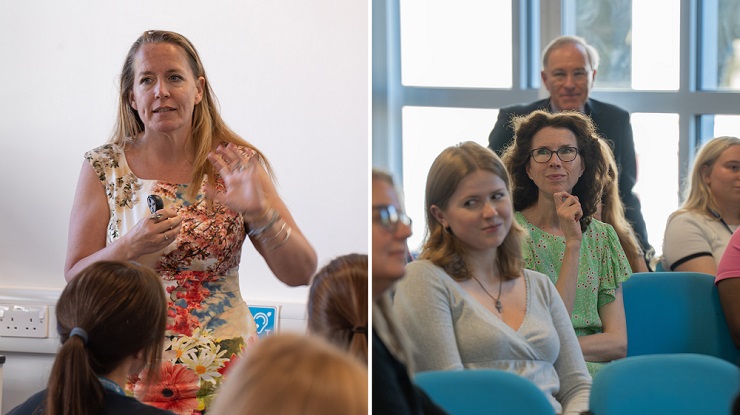
    The showcase event included thought-provoking presentations on the effect of LifeLab’s work on young people. The evening was opened by LifeLab Director and Programme Manager, Professor Kath Woods-Townsend. Professor Mary Barker delivered an inspiring talk highlighting the transformative impact of LifeLab.

    Dr Debbie Chase is Director of Public Health at Southampton City Council, explored the benefits to the community. Sinead Holmes, Head of Access, Widening Participation and Social Mobility, spoke about the university’s Widening Participation Social Mobility report.

    Young people take the stage

    Students from the NxtGen Researcher programme took to the stage to present their own research projects. They also shared the positive influence LifeLab has had on their lives. Members of the Youth Panel also shared their findings on key issues. These included ultra-processed foods, climate change and the role of AI in medicine.

    Professor Lucy Green also spoke about the Impact Case Studies Go Wild! project. This was a collaboration between the Youth Panel and researchers in the university’s Faculty of Medicine.

    A special night

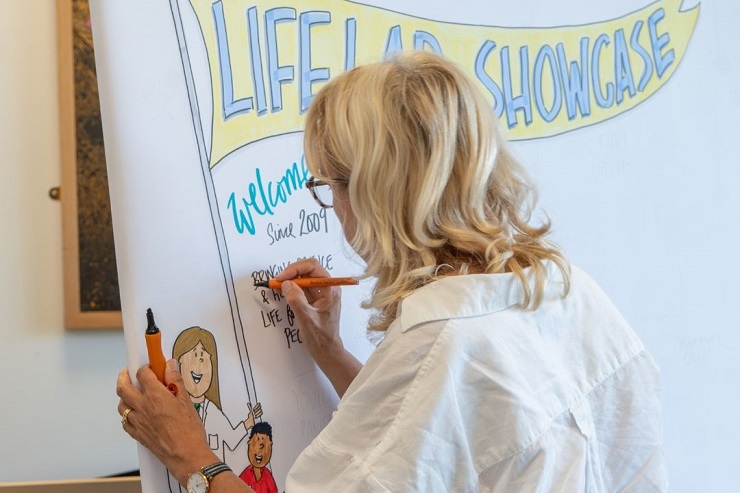
    The event was vividly brought to life by Emma Paxton. Her infographic of this year’s Showcase will be proudly displayed in our facility.

  • Minister meets Southampton experts helping children to lead healthier lives

    Minister meets Southampton experts helping children to lead healthier lives

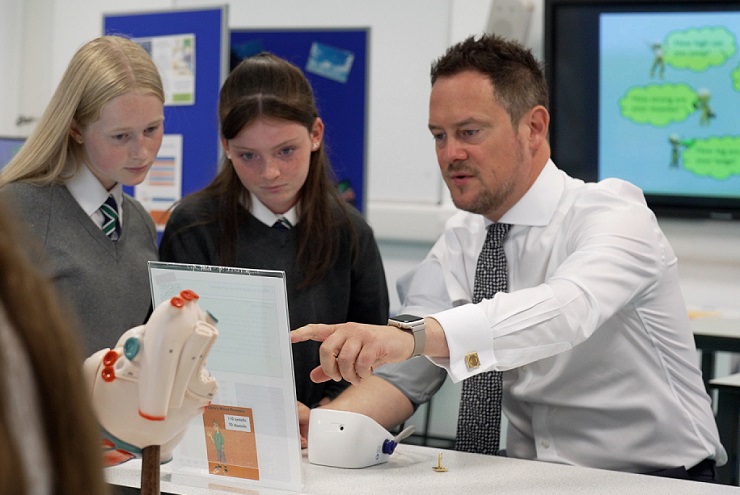
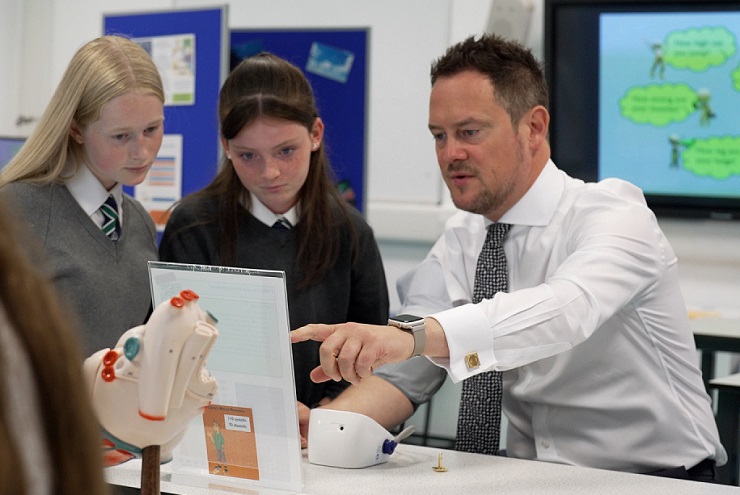
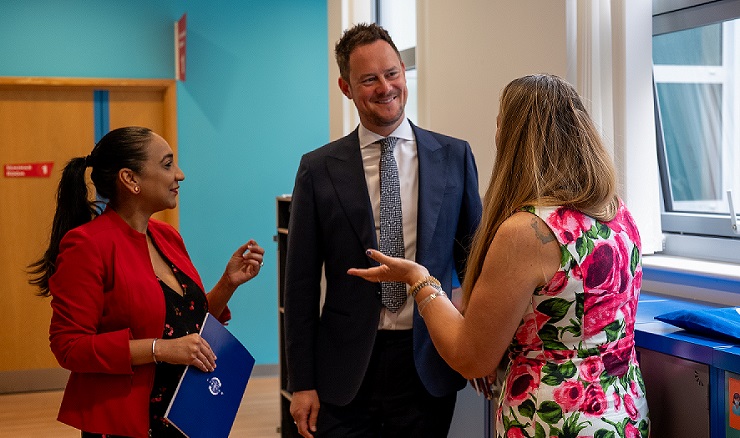
    LifeLab students with Minister Stephen Morgan
    MPs Satvir Kaur and Stephen Morgan speaking to Kath Woods-Townsend

    Government minister Stephen Morgan has learned how Southampton researchers are improving children’s long-term health prospects.

    The Minister for Early Education and visited University Hospital Southampton (UHS) yesterday. He was joined by the Member of Parliament (MP) for Southampton Test, Satvir Kaur. They spoke to pupils from a secondary school in Gosport, who were taking part in a hands-on session at LifeLab.

    LifeLab is a unique research-based educational programme. It is a collaboration between the University of Southampton, the NIHR Southampton Biomedical Research Centre and UHS. Its teaching laboratory is based at Southampton General Hospital. The programme empowers children and young people to understand the science behind their health. This informs the choices they make for their own lives.

    Official engagement

    Stephen Morgan oversees early education in his ministerial role. He has a particular interest in the use of data, digital technology and science.
    During his visit to LifeLab, the Minister mixed with secondary school students from King’s Academy Bay House School. They explored how factors such as diet, physical activity and sleep can affect their health and wellbeing.

    He also heard how scientists are using big data on pregnancy and early life to predict obesity at a young age.

    Long-lasting benefits

    The LifeLab programme is linked to the school curriculum. Over the last twelve years, it has worked with more than 17,000 secondary school students from over 120 schools.

    The programme is also reaching primary school children across the city through Early LifeLab. It is up and running in over 40 percent of Southampton primary schools. To date, it has reached more than 6,500 children.

    Obesity Research

    The MPs also met the University of Southampton’s Professor Nisreen Alwan, Professor Simon Fraser and Dr Nida Ziauddeen. They are leading a study that aims to identify whether a child is at risk of obesity in later life. It is using data collected during pregnancy and early childhood at UHS.

    The researchers have devised a prediction model to estimate the risk of obesity at primary school. It will help provide targeted interventions. This could support families, nurseries and schools to mitigate the risk of children becoming overweight.

    They have also found lower education and academic ability in primary school is related to greater use of health services, with more hospital admissions and outpatient appointments, when they reach middle age. The age at which people leave school seems to be an important mediator in this relationship, underscoring the positive impact of time spent in education.

    This research was supported by NIHR Applied Research Collaboration Wessex and the NIHR Southampton Biomedical Research Centre.

  • Meet the Scientist: Bringing together young people and researchers

    Meet the Scientist: Bringing together young people and researchers

    Our Meet the Scientist sessions are a popular part of school visits to LifeLab. They are short, 15 minute informal sessions, where small groups of school students meet professionals who use science and/or research in their work lives. Here, we share some tips for scientists or researchers interested in running a session.

    A great experience

    Meet the Scientist is highly valued by the professionals, students and teachers who take part. It always highly rated on our evaluation forms, with lots of positive comments from teachers and students who’ve attended the sessions. Seeing real scientists and researchers can change young people’s perceptions of them, and help challenge misconceptions. Young people realise they are ‘normal’ people, just like them. This encourages them to consider these jobs as something they could do.

    We see this in their feedback:

    We therefore try to make sure two out of three scientists and researchers are female, inspiring girls to consider jobs in science, technology, engineering and maths (STEM).

    For some students, the experience changes their career aspirations. For example, Gia said in her feedback:

    However, it’s not just about opening their eyes to possible careers. Students are fascinated by the research happening in the university and hospital in their city, and find it really interesting.

    Teachers also really value the Meet the Scientist sessions, with many saying it is a key benefit of their visit to LifeLab.

    Not only for scientists

    A common misconception is that this session is only for ‘traditional’ scientists, but this is a unique opportunity to give young people an insight into the diverse jobs and careers available to them through research and STEM-related disciplines.

    Your insights and experiences have the potential to make lasting impressions and inspire students. You can be a lab manager, technician, PhD student, researcher, statistician, communications officer, project manager, administrator, or any other role. The diversity of expertise you bring makes this session especially impactful. Your contribution will be incredibly valuable to the students.

    What would I need to do?

    The purpose of Meet the Scientist sessions is to open up the world of science and research to young people, demonstrate the breadth of opportunity, and to challenge their misconceptions and their perceptions of what ‘real scientists’ are.

    You will give a short introduction about yourself and the role you do. This is an opportunity to share something about your current job and career path that is of interest to you. You may wish to use a prop, have some short interactive activity, even a dramatic image – something to encourage discussion and questions. Then open the floor for questions. The students will have been primed to think of questions, but young people can be shy about speaking up, so having some open questions to encourage discussion is always a useful tactic.

    Attending the training session

    What if you’ve never done anything like this before, or you’re unsure what you need to do?
    You can come along to our Meet the Scientist training day. We’ll give you an insight into what it’s like to run a session, an idea of what we’re looking for, and tips on how you can prepare your session. It’s also possible to shadow another session, so you can see for yourself what it’s like.
    Over 500 people have now taken part in this training day. Together, their sessions have meant over 17,000 young people have now heard about science and research happening at the university and hospital.

    While not a requirement for doing a Meet the Scientist session, our training day attendees have said they have found it extremely helpful. It gives you tips on how to pitch your research to young people, opportunities to practice that training, and feedback on how to improve.

    Previous attendees have said they particularly liked the ‘elevator pitch’ sessions, where they explained their research clearly and concisely, with feedback on how to improve. They also valued opportunities to meet a teacher, and scientists experienced at running sessions.

    Researchers tell us Meet the Scientist changes the way they think about their own research. It’s also a great way to ensure your research is having an impact, as it takes it outside the ‘bubble’ of scientists and researchers in your field, and means people in the real world hear about it.

    Meet the Scientist can be really helpful for demonstrating your commitment to public engagement and science communication. The training day feeds into the STEM Ambassadors scheme, and we can get you set up with DBS checks. We also put together profiles of scientists and researchers on lifelabonline.org for schools and colleges to see.

    How do I get involved?

    Come and share your passion for what you do, make sure your research has a real impact, and inspire the next generation to follow in your footsteps.
    Please email us at lifelab@soton.ac.uk. We’ll let you know when our next training session is, and the dates we have available for you to come and run your session.

    There is no expectation that you will be able to run a session on one of these dates. We appreciate you giving up your time when you can, and value any sessions you can offer.