Category: News

  • Widening access to medicine: Giving more young people skills to become doctors

    Widening access to medicine: Giving more young people skills to become doctors

    BM5 student Tessa Comley, with Widening Access to Medicine students

    Students interested in studying Medicine came to Southampton from across the country for a course designed to prepare them for applying to university.

    Widening Access to Medicine is intended for Year 12 students who plan to apply through a widening participation programme or contextual admissions route. It equips them with valuable knowledge and skills to support their application. The event took place in April at the University of Southampton’s (UoS) Highfield Campus. It also included virtual work experience with staff at University Hospital Southampton (UHS).

    Kate Bartlett, Developing Talent Lead at LifeLab, delivered the programme. LifeLab is a joint initiative between UoS, UHS and the NIHR Southampton Biomedical Research Centre. It aims to empower children and young people, through science, to make positive lifestyle choices.

    Supporting applicants and enhancing equity

    Ensuring that all young people have the appropriate opportunities and support to apply for medical school will enrich our learning environment and the profession. Currently, one third of schools do not produce any medical school applicants, and outreach activities from medical schools can support those communities who are currently underrepresented in medical school admissions.

    The University of Southampton offers both contextual admissions and a specific widening participation medical degree aimed at specific under-represented groups. There are also scholarships, grants and bursaries which can provide additional financial support for these students throughout their degree.

    Widening Access to Medicine is a three-day hybrid course. This includes one in-person day at Highfield Campus, online workshops, and one day of live virtual work experience with UHS staff.

    Overall, 28 students visited Highfield Campus for the event. To be eligible to attend, they needed to be studying A Level Biology and one additional science, and to meet certain criteria aligned with those of the University of Southampton’s widening participation medical degree.

    These included living in a disadvantaged area, being a young carer, being looked after by a Local Authority, or being part of a travelling family. They might have received free school meals in secondary school, they or their parents or guardian could be receiving benefits, or they may be the first generation in their family to apply to Higher Education.

    In this way, the Widening Access to Medicine course provides young people who may not have had access to the same opportunities or support as others with valuable information, skills and experience to support their application for Medicine.

    An enjoyable and valuable experience

    Students who attended had the chance to practice their clinical skills, do mini-interviews, and talk to medical students and staff. They explored medical specialities, discussed medical ethics, and saw live clinics as part of their virtual work experience.

    Dr Anoir Lagzouli gave a keynote speech, while Dr Shmma Quraishe spoke about the University Clinical Aptitude Test (UCAT) and admissions process.

    As part of the University’s new initiative ‘Study Local, Stay Local’, it offers some interview places on the BM6 programme for local applicants, whose address is in Dorset, Hampshire and Wiltshire. They also have places for graduates from the University of Southampton who apply to the BM4 programme. Applicants must meet both the non-academic and academic criteria for these programmes to be eligible.

    The students who took part have said they found the experience useful, and that they plan to use the knowledge and skills they have gained in their university applications.

  • LifeLab Youth Panel collaborates with researchers for first time

    Young people in our Youth Panel have been working with researchers in the University of Southampton’s Faculty of Medicine, as part of an exciting new collaboration.

    What is the Youth Panel?

    Since 2022, young people have been employed on LifeLab Youth Panels as equal partners on projects shaped and inspired by them. The Youth Panel was established to provide a space for young people to discuss the health-related things that concern them. It allows them to actively create and implement solutions that could improve their own health and that of their peers.

    First Youth Panel collaboration

    The project, Impact Case Studies Go Wild!, gave the young people the opportunity to take complex medical research and transform it into accessible formats for the public. It was led by Professor Lucy Green, Head of Engagement for the Faculty of Medicine, and Kate Bittlestone, Research and Enterprise Manager. Over the course of three sessions, they explored how medical research translates into real-world impact. This included insights from Dr Charles Opoku, Yaryna Basystyuk, Dr Michael Head and Prof Lucy Green. The young people then heard from researchers, questioned the research, and created original pieces inspired by their favourite theme.

    Professor Kath Woods-Townsend, LifeLab Director, highlighted the significance of this collaboration:

    Chelsea’s film and Seth and Gayathri’s poetry – using AI in cancer treatment

    Dr Navamayooran Thavanesan’s research focuses on improving outcomes for patients with oesophagogastric cancer—a type of cancer affecting the food pipe and stomach. While surgery remains the primary treatment, many patients also require chemotherapy or radiotherapy, which can have significant side effects. Dr Thavanesan’s team is developing a machine-learning tool to assist teams working on upper gastrointestinal surgery, with the aim of improving patient outcomes.

    Inspired by this project, Chelsea created a video, featuring an interview with Dr Thavanesan. This explored how AI could streamline diagnosis and treatment, potentially replacing invasive procedures like CT scans with simple blood tests.

    Seth and Gayathri expressed their thoughts through poetry. Gayathri’s poem, ‘The Make-Up of AI’, reflects on how technology can transform healthcare and save lives. Seth’s poem focused on the long-term benefits of AI in medicine. Dr. Thavanesan was particularly struck by how the students captured both the promise and concerns surrounding AI in healthcare.

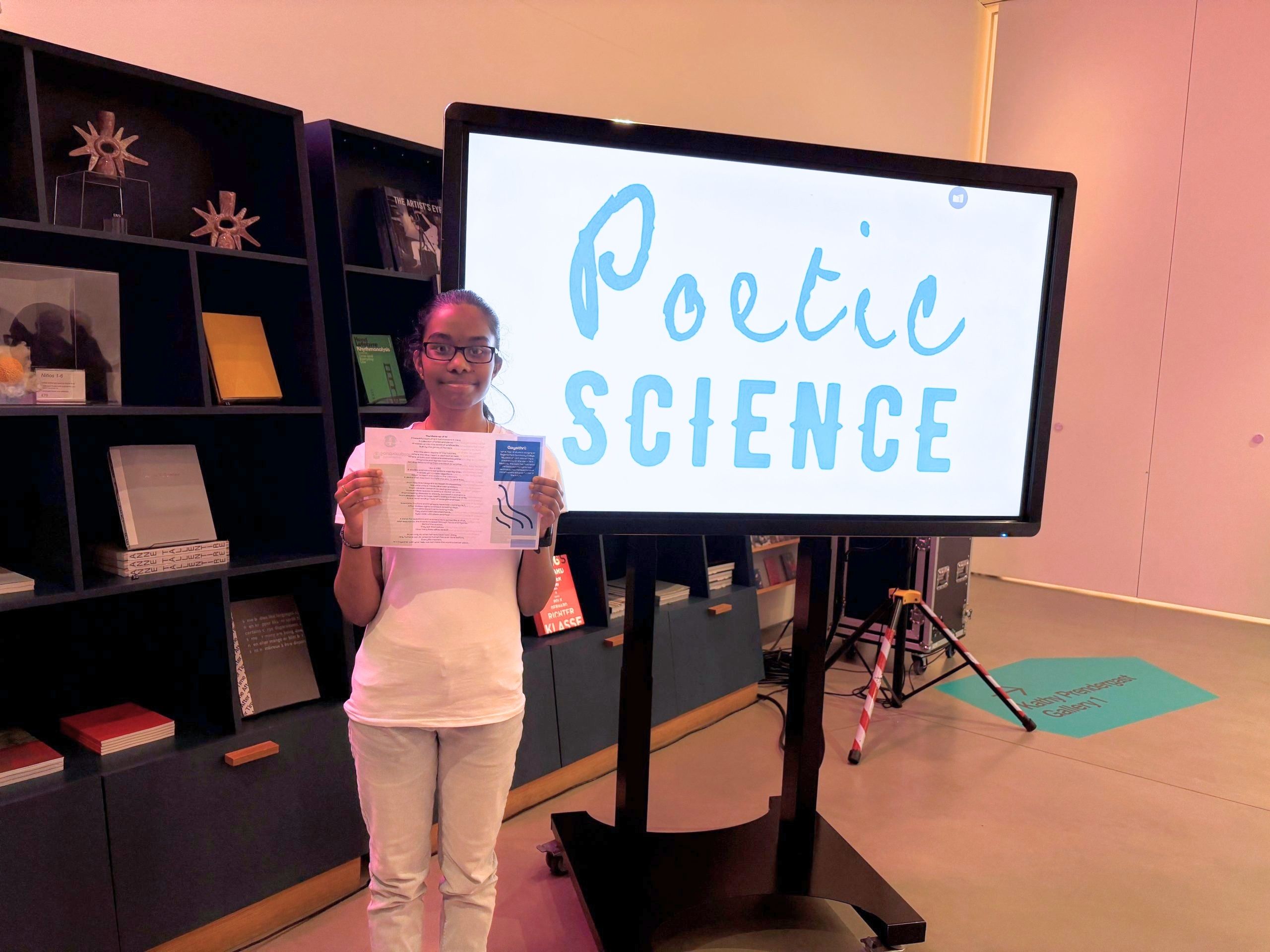
    Gayathri and Seth’s poems were showcased at Poetic Science Live in March. Poetic Science is a key part of the Science and Engineering Festival, blending science with the arts to create innovative approaches to public engagement.

    Imogen’s poster and Uyathandwa’s interview – RSV vaccine trials for infants

    Respiratory Syncytial Virus (RSV) is a leading cause of respiratory infections in young children. Dr Alasdair Munro is leading a trial of a vaccine designed to protect infants from RSV.

    Inspired by his work, Imogen created a poster promoting the trial and encouraging parents to participate. She highlighted key findings, including the vaccine’s 81% effectiveness in preventing illness.

    Uyathandwa was also drawn to the project’s potential to raise awareness. She conducted an interview with Dr Munro, spotlighting the key findings of his study

    Reflecting on the experience, Dr Alasdair Munro said:

    Jayden’s presentation – Acne Care online

    Acne affects over 90% of teenagers and many adults. Professor Miriam Santer’s Acne Care Online initiative seeks to help young people find effective treatments, reduce antibiotic overuse, and address the mental health impact of acne. Her team is also exploring spironolactone as an alternative treatment for adult female acne. Interested in this topic, Jayden created a presentation to educate teenagers about acne.

    Ashmin’s video – climate change and health

    Dr Michael Head’s research explores the relationship between climate change and health. It highlights its role in worsening health inequalities and its impact on vulnerable populations. In response, Ashmin created a video highlighting the health consequences of climate change. She interviewed peers to capture their perspectives and emphasised the urgency of action. Dr Head valued the insights the students provided. By translating medical research into creative and accessible formats, these young people have helped bridge the gap between science and the public.

  • SOTSEF 2025: Science festival fun with families

    SOTSEF 2025: Science festival fun with families

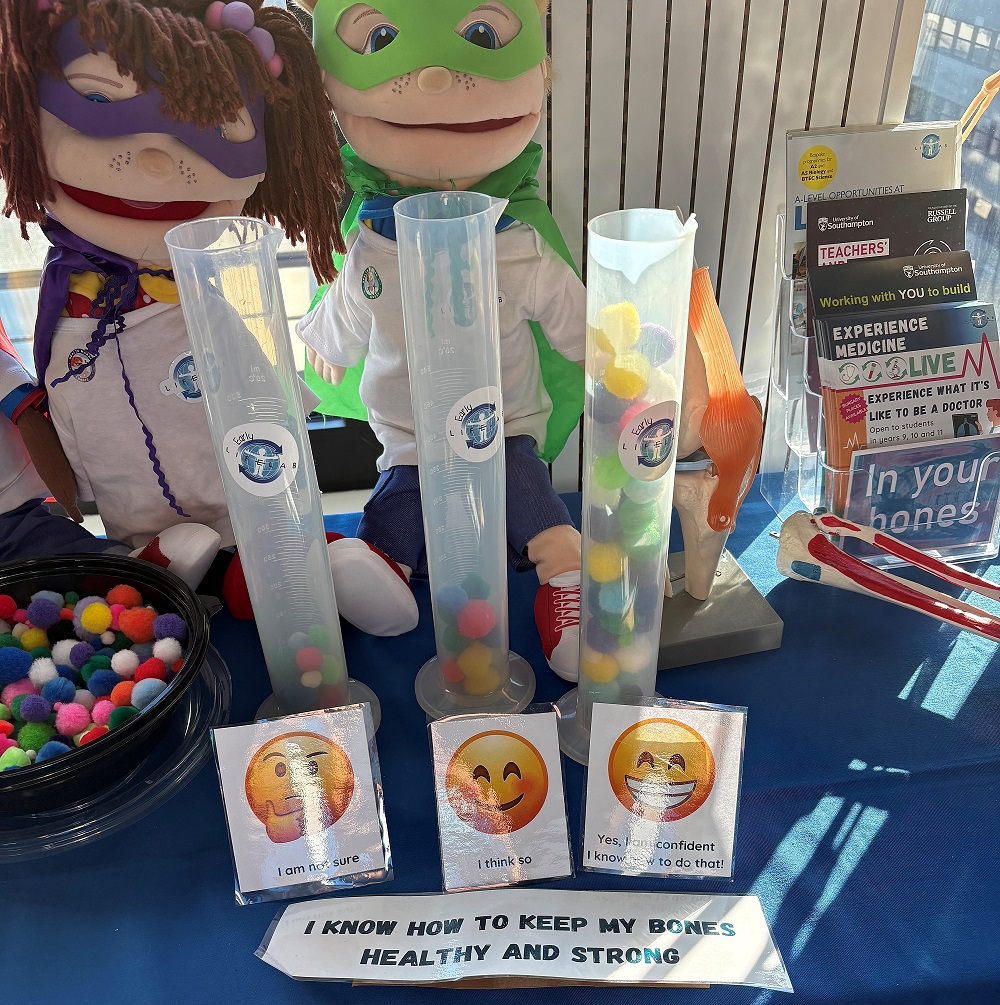
    LifeLab display at SOTSEF 2025

    We are proud to have been part of this year’s Southampton Science and Engineering Festival.

    What is SOTSEF?

    Southampton Science and Engineering Festival (SOTSEF) is the University of Southampton’s annual award-winning science festival. It takes place every year in March, during British Science Week, with a free family-friendly event on the Saturday. This allows everyone to explore and discover the worlds of science, technology, engineering, art and mathematics.

    This year, the event had over a hundred hands-on activities, workshops, talks, exhibits shows and laboratory tours.

    All about bones

    This year, our stand was all about bones, and what people can do to keep their bones healthy.

    We had a range of fun, hands on, engaging and interactive activities for all ages. Visitors could make X-Ray hands, create and label a skeleton. They could also find out interesting facts about bones. It was a chance to discover the answers to questions such as ‘Why do we need bones?’, ‘How many bones does the adult human skeleton contain?’ or ‘Which are the longest, smallest, strongest bones in your body?’.

    It was a fantastic day. We hope you could make it, but if not, come along next year!

  • Impact Report 2024

    Impact Report 2024

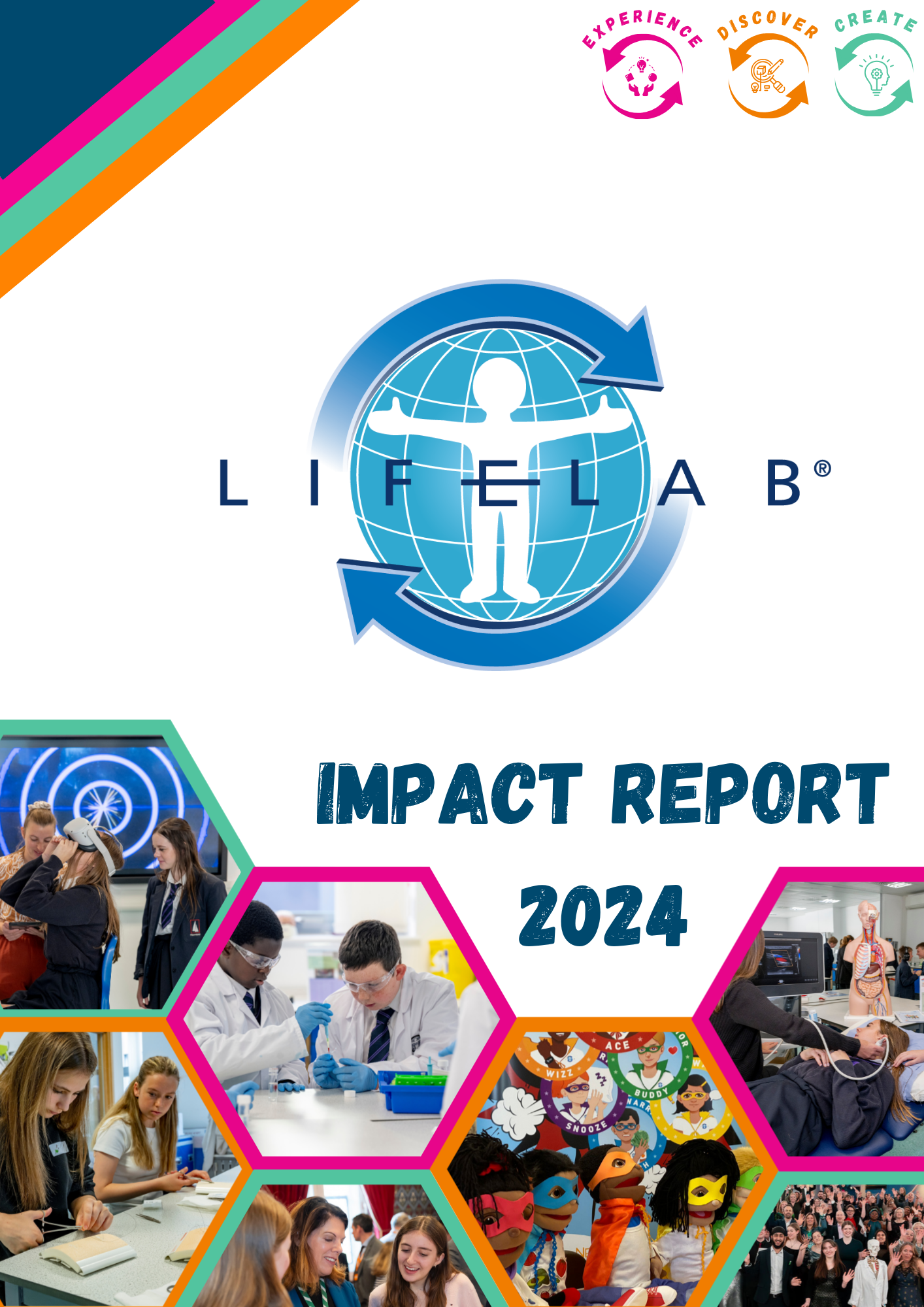
    LifeLab 2024 impact report cover

    We are delighted to share our 2024 impact report.

    It’s been another fantastic year for LifeLab. We’ve reached more than 16,000 secondary school students with our hands-on, curriculum-linked science programmes, and saw the roll-out of our Early LifeLab programme into more than 20 primary schools, reaching more than 4,000 pupils. Not only that, but we increased our global partnerships to deliver similar interventions under the LifeLab banner in Australia, Ireland and South Africa. We saw the young people taking part in our Youth Panel and Young Research Training programmers go from strength to strength and we trained 36 researchers and scientists in engagement programmes.

    And as 2025 is already well underway, those achievements have already been surpassed meaning we are bringing our programme to even more young people across the south!

    2024 also marked the 10-year anniversary of our bespoke LifeLab facility at University Hospital Southampton, an important milestone, on which the report reflects on.

    Thank you to everyone who has supported us over this past year and before that. We hope you enjoy reading about the amazing impact LifeLab has had and continues to have on young people, their families, teachers and our community partners.

  • Summer term 24/25 newsletter

    Summer term 24/25 newsletter

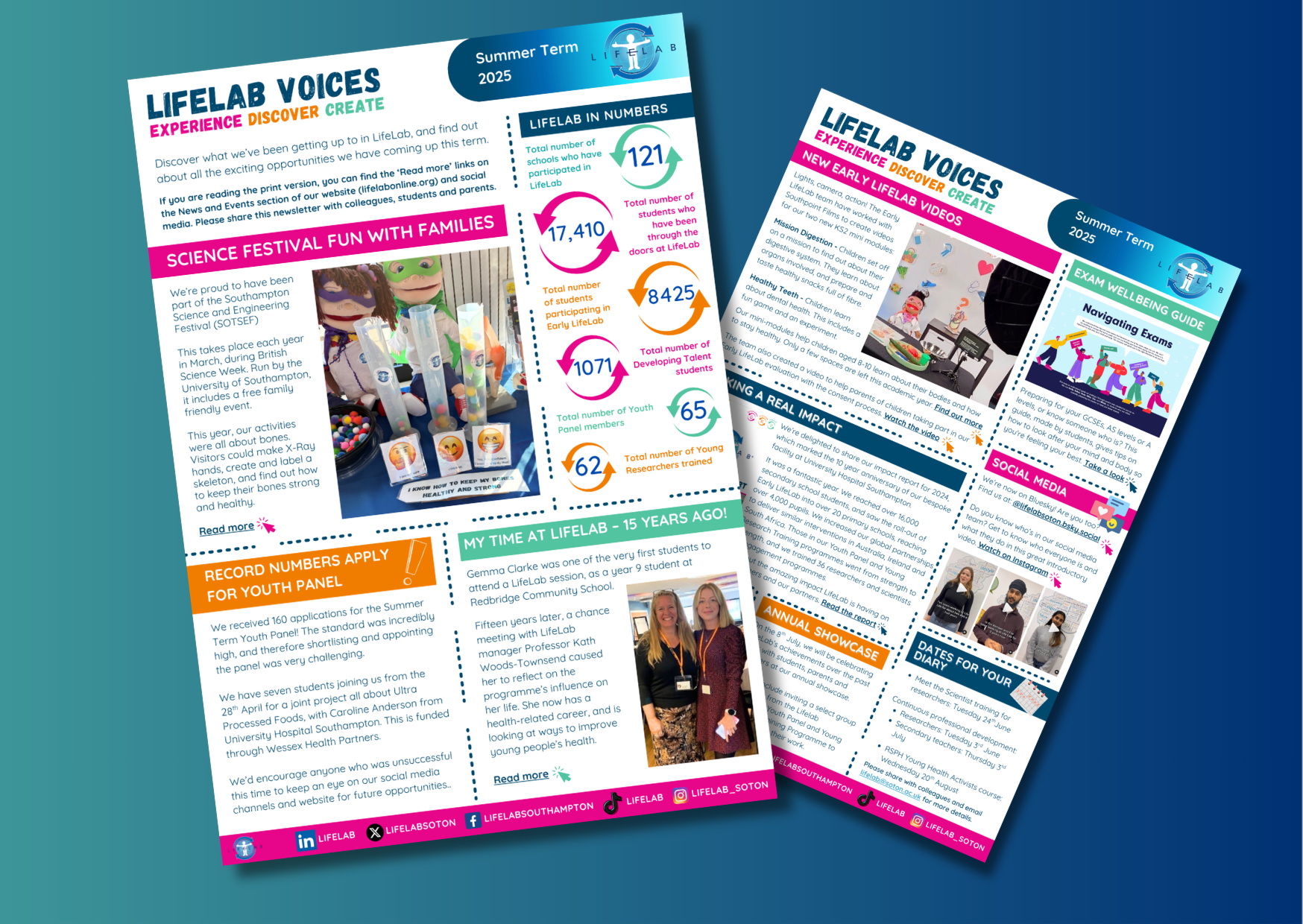
    Summer term 24-25 newsletter

    Take a look at our summer term newsletter to find out what we’ve been getting up to, and discover the opportunities and events we’ve got coming up this term.

  • My time at LifeLab – 15 years ago!

    My time at LifeLab – 15 years ago!

    Kath Woods-Townsend Director at LifeLab and Gemma Clarke a former LifeLab attendee

    As a year 9 student at Redbridge Community School in 2009, Gemma Clarke was one of the very first to attend a LifeLab session. Fifteen years later, a chance meeting with LifeLab manager Professor Kath Woods-Townsend caused her to reflect on the programme’s influence on her life.

    Experiencing our pop-up labs

    More than 16,000 young people from Southampton and surrounding areas have now experienced LifeLab. Before our bespoke facility in the heart of University Hospital Southampton (UHS) was opened in 2014 by HRH the Countess of Edinburgh, the programme was held in ‘pop-up’ labs.

    These were either at the University of Southampton’s Highfield Campus (the Maths and Science Learning Centre), in the NIHR Southampton Clinical Research Facility at UHS, or in the Institute of Developmental Sciences labs and at the Princess Anne Hospital.

    Gemma attended a pilot session, to establish whether the concept would be beneficial to young people and feasible in a laboratory setting. Alongside a group of her classmates, Gemma took part in various experiments looking at the body, including grip strength and DNA sequencing.

    Inspiring a health-related career

    Gemma now works at Health Innovation Wessex, a regional organisation established by NHS England to spread innovation in health and care. One of the projects she is currently supporting is looking at ways to improve the health of younger people.

    It was at a workshop event for Children and Young People’s Healthy Weight, where she met Kath and found out what had been happening at LifeLab. She says what she remembers of her LifeLab trip, and how it continues to play a role in her life now.

    Gemma has spent time working in the NHS. In her last role, she supported an NHS England initiative setting up and overseeing clinics for Children with Complications Related to Excess Weight.

    Empowering students

  • Work experience opportunities

    Work experience opportunities

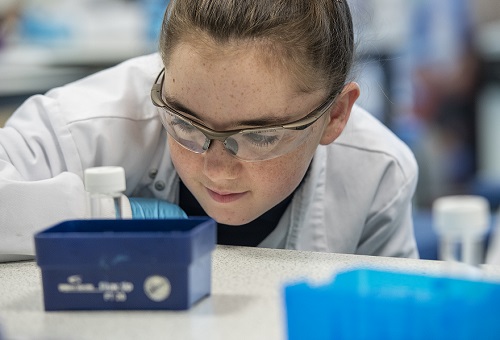
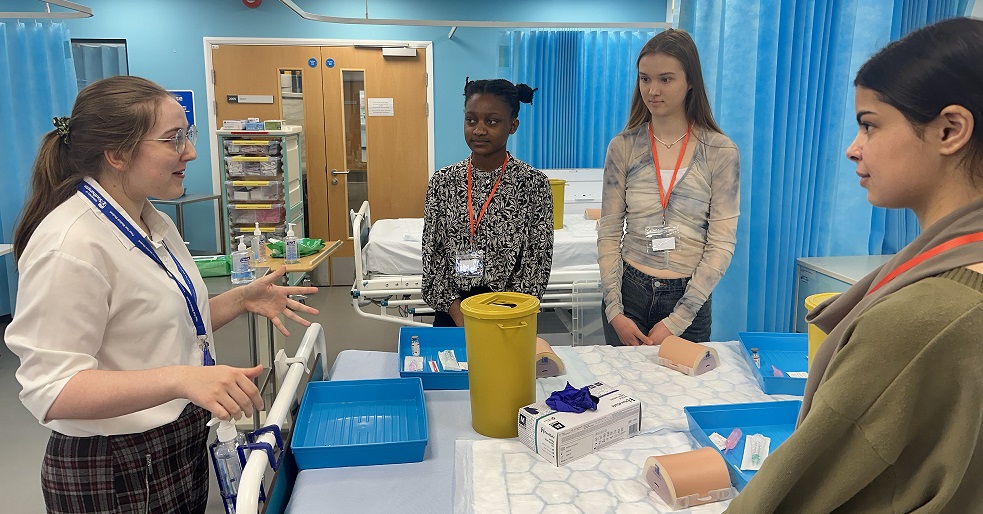
    Student participating in practical work

    Considering a career in medicine, or know someone else who is?

    LifeLab, the Faculty of Medicine, University of Southampton (UoS) and University Hospital Southampton (UHS) are committed to offering valuable work experience opportunities to young people both in-person and online. Take a look through some questions you may be thinking of below to find out more.

    Why is work experience important?

    Work experience allows you to gain insight into careers, develop skills, and discover what inspires you. Whatever area you’re considering this is a great chance to find out more about yourself and learn about your strengths, interests and abilities. Work experience allows you to:

    • test out career ideas you may be thinking about.
    • improve skills such as teamwork or communicating in a professional field.
    • show your commitment and enthusiasm for future personal statements and CVs.

    Through work experience here, you can explore different paths and areas such as research, teaching and healthcare professions, gaining an insight into interdisciplinary working.

    At the university and hospital, you’ll not only learn about the academic side of these fields, but also see how cutting-edge research translates into real-world healthcare and education for all ages.

    You’ll have the opportunity to observe and interact with professionals who are making a difference in science, medicine and education every day.

    What work experience opportunities are available?

    There are four different route you can take:

    • open to young people who have done an activity with LifeLab (through school, the ‘Experience Medicine with LifeLab Summer School’, the Youth Panel or the Young Researcher Training Programme).
    • up to one week of in-person work experience arranged by LifeLab.
    • runs throughout the year.
    • experience a range of different career options, spending each day with a different professional at the hospital or university.
    • contact lifelab@soton.ac.uk to apply.
    • for those wanting in-person work experience, but have not been to LifeLab.
    • offered by the university’s Faculty of Medicine for anyone aged 14 and above.
    • runs throughout the year.
    • our flowchart will help you find out how to apply.
    • UHS run a virtual work experience programme in partnership with LifeLab.
    • open to Year 12 (lower sixth) students living in the UK, studying A-Level biology and are interested in studying medicine at university.
    • runs at specific times in the year: Aug, Oct half term, Feb half term, and during the Easter Holidays.
    • over two days students will experience work at the hospital, as it is happening, through Microsoft Teams. Sessions include live surgery, outpatient clinics, and talks from doctors and medical students.
    • register your interest and find out more.
    • three-day course for Year 12 students intending to apply to study medicine at university through a widening access programme or contextual admissions route.
    • jointly run by the Faculty of Medicine and UHS.
    •  includes two days of virtual work experience.
    • runs during the Easter holidays.
    • find out more and apply.

    I’m worried I don’t have the skills to do work experience. Should I still apply?

    Absolutely! Work experience is a challenge to yourself and an opportunity to learn. It will probably be out of your comfort zone, as you may have never been in a working environment before. Try setting yourself some goals to achieve before going in. Examples include:

    • communicating with others effectively
    • working with others confidently
    • learning how to solve problems by approaching them with a different perspective

    Have other students enjoyed the experience?

    Yes! Here are some insights into what other young people thought of it:

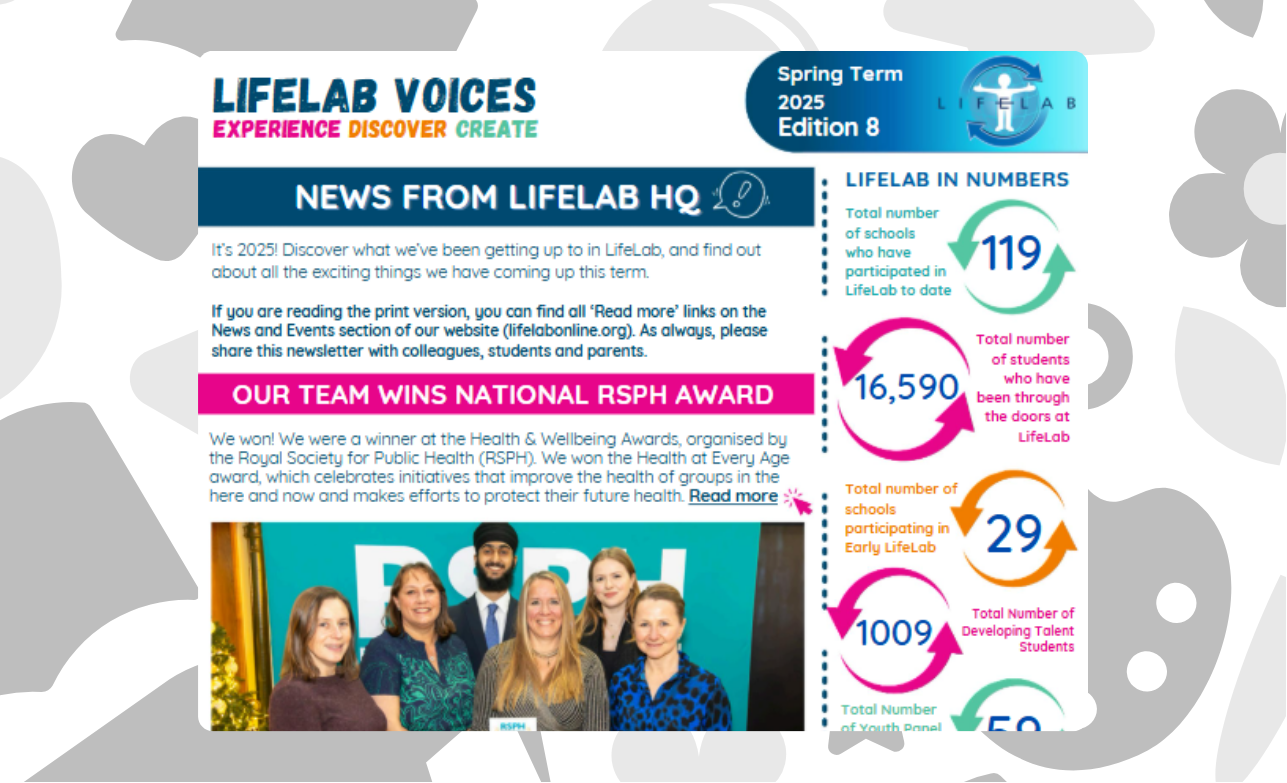
  • Spring term 25 newsletter

    Spring term 25 newsletter

    Take a look at our spring term newsletter to find out what we’ve been getting up to, and discover the opportunities and events we’ve got coming up this term.

  • Southampton researchers and teenagers urge MPs to include young voices in future vaping policies

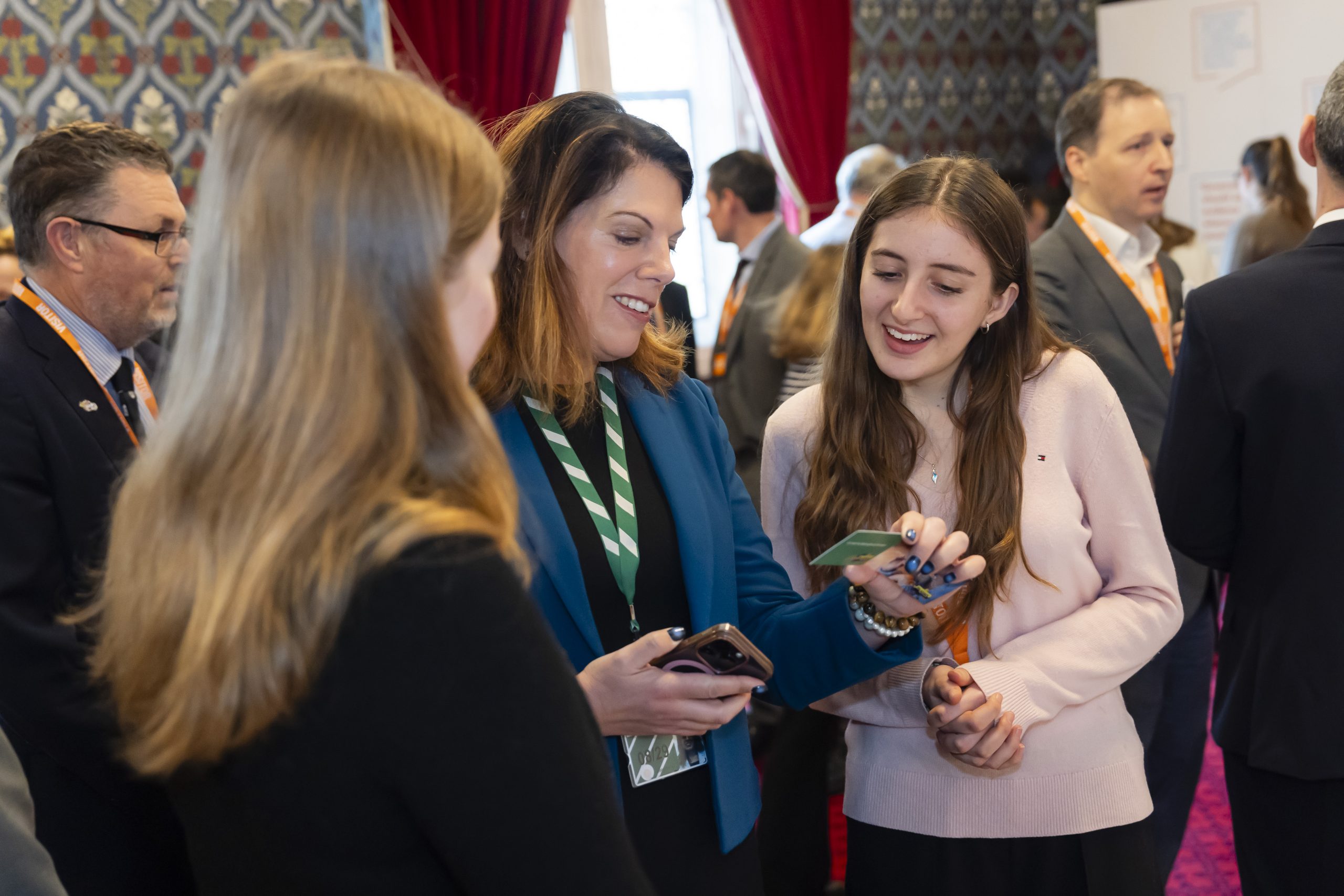
    Researchers and young people from LifeLab at the University of Southampton have attended Westminster to urge MPs to consider young people’s views when making policies about vaping.

    Vaping has risen sharply among young people, with a quarter of 11 to 15-year-olds using a vape last year. Young people are attracted to the fruity flavours, bright colours, and child-focused branding however, many young people are concerned about how easily they can access vapes and the marketing tactics used.

    Speaking to MPs and parliamentary staff including Jonathan Davies, MP for Mid Derbyshire, Lizzie Collinge, MP for Morecambe and Lunesdal and local MPs Caroline Nokes and Darren Paffey at Evidence Week in Parliament, the Southampton team encouraged policymakers to make young people active partners in addressing the vaping crisis.

    Professor Kath Woods-Townsend, LifeLab Manager was joined by Professor John Holloway, Associate VP of Interdisciplinary Research at the University of Southampton and Maddie Harris, 18, and Eva Morrill, 16.

    Both Maddie and Eva took part in the LifeLab Youth Panel, which empowers young people to actively create and implement solutions that could improve their own health and that of their peers. Their panel focused on the role vaping plays in their lives. They worked with a Global Health Masters student to collect focus group data to develop resources to support schools and youth organisations to engage and educate young people about the dangers.

    They presented their research, resources and recommendations to MPs during Evidence Week, a unique annual event bringing together the public, parliamentarians and researchers from across the UK to discuss how evidence from frontline research can inform policymaking in Parliament.

  • Young people urge collaboration on city’s future health policies

    A group of young people have called on Hampshire and Isle of Wight health leaders to collaborate with them on policies for their age group.

    The group of 15 made the call while taking part in the NxtGen Researcher Programme. The programme is jointly led by Professors Matt Ryan and Mary Barker at the University of Southampton. Professor Barker is part of LifeLab’s board of directors.

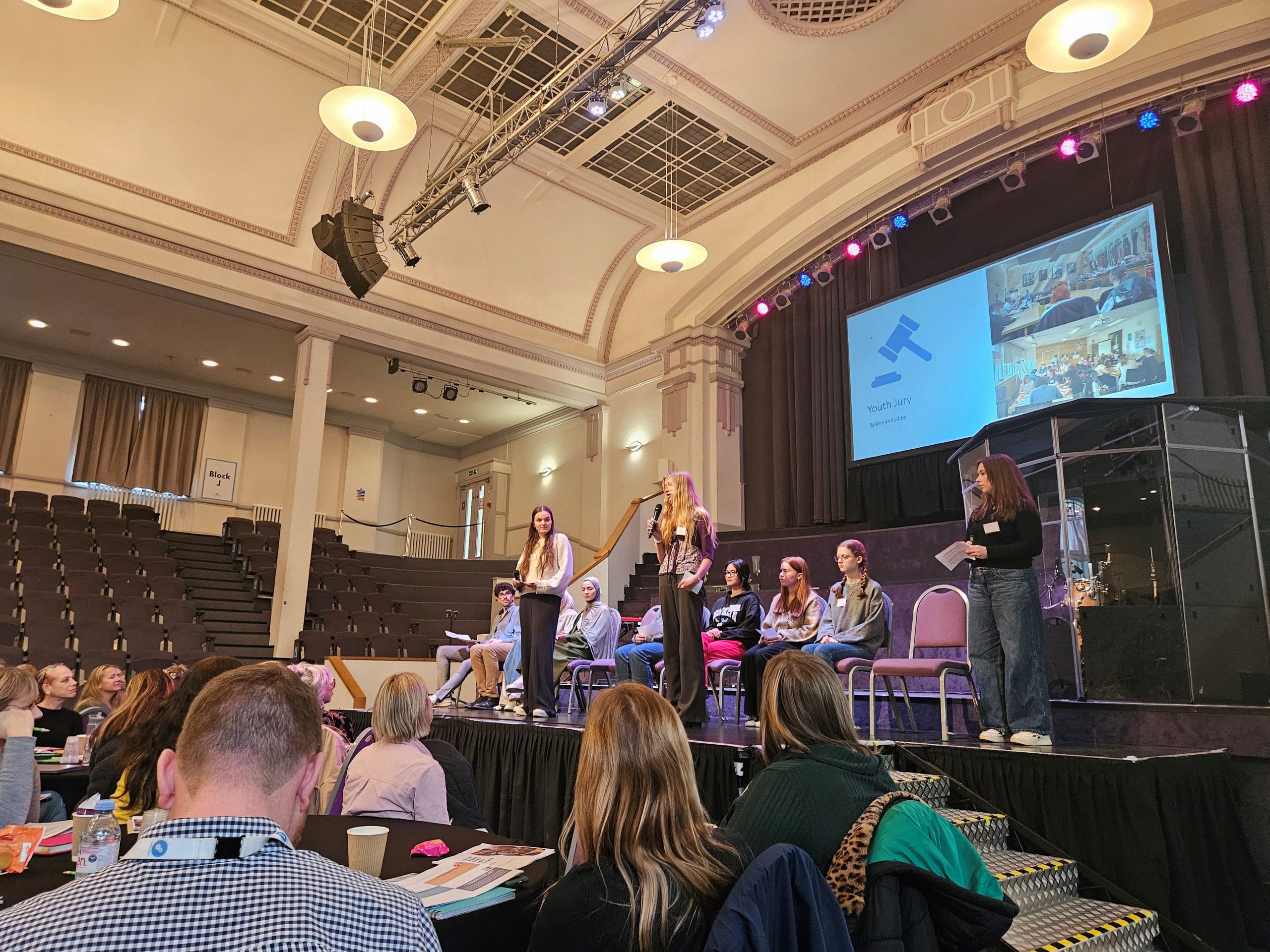
    Presenting their recommendations

    The young people said it was important to engage with them on the health and social care issues that affect them. They say this, along with listening to their lived experiences, will lead to positive changes in the community.

    The 16-week YRTP took place in the summer term. It culminated in a citizen’s jury, where the young people interrogated members of the Hampshire and the Isle of Wight Integrated Care Board (ICB).

    The young people then presented 12 policy recommendations from the citizen’s jury at an assembly in November. Around 90 professionals attended from local organisations invested in children and young people. They included professionals from the ICB and Integrated Care Partnership (ICP).

    The recommendations covered a range of issues affecting local young people. They included responding to vaping proactively and producing youth-led marketing of health programmes. The young people suggested expanding extra-curricular wellness activities. They also recommended encouraging the mixed teaching of Sexual and Reproductive Education.

    Presenting their recommendations

    The YRTP aims to develop research and advocacy skills in young people. This equips them with tools to support their academic and employment journeys and beyond. This year’s programme focused on identifying and researching issues that mattered most to the participants and their peers.

    One YRTP group developed a range of health and social care priorities for young people. To do this, they worked with community groups and health and social scientists and conducted research with their peers. They used research techniques such as focus groups, surveys and secondary data analysis.

    They took part in a special three-day deliberative workshop in the summer. At this, they interrogated local health leaders. This helped them refine priorities and produce a set of policy recommendations to improve young people’s health. These were then presented at the assembly in November.

    Professor Barker is Professor of Psychology and Behavioural Science. She is also Deputy Director of the Institute for Life Sciences.

    Giving young people a voice

    The group’s recommendations were favourably received by the professionals. They recognised the importance of giving young people a voice.