Introduction

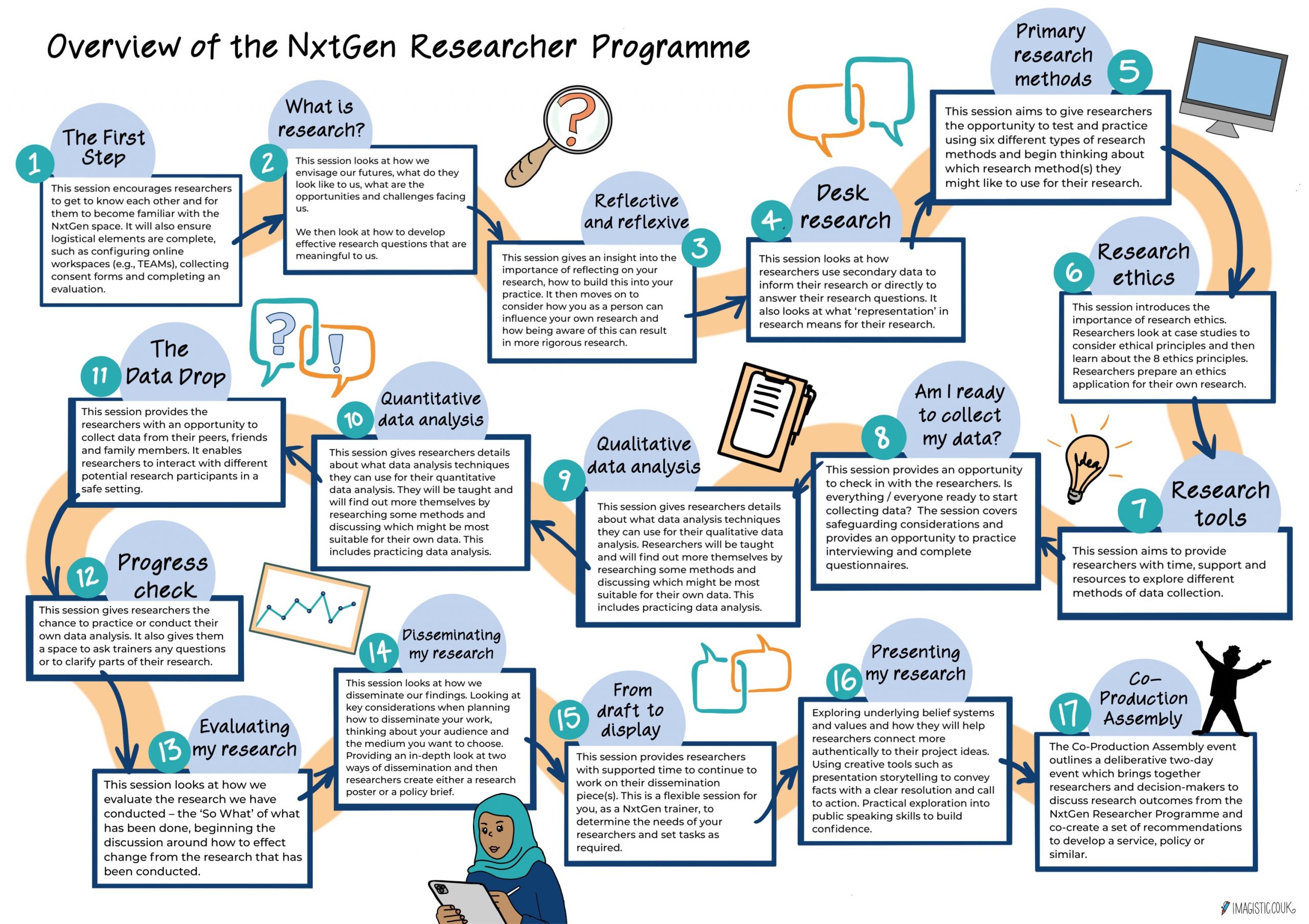
Overview of the NxtGen Researcher Programme

Session 1: The first step (Onboarding)
This session encourages researchers to get to know each other and for them to become familiar with the NxtGen space. It also ensure logistical elements are complete, such as:
- configuring online workspaces (e.g., TEAMs)
- collecting consent forms
- completing an evaluation
PowerPoint presentation
Recorded presentation

Session plan

Session 2: What is research?
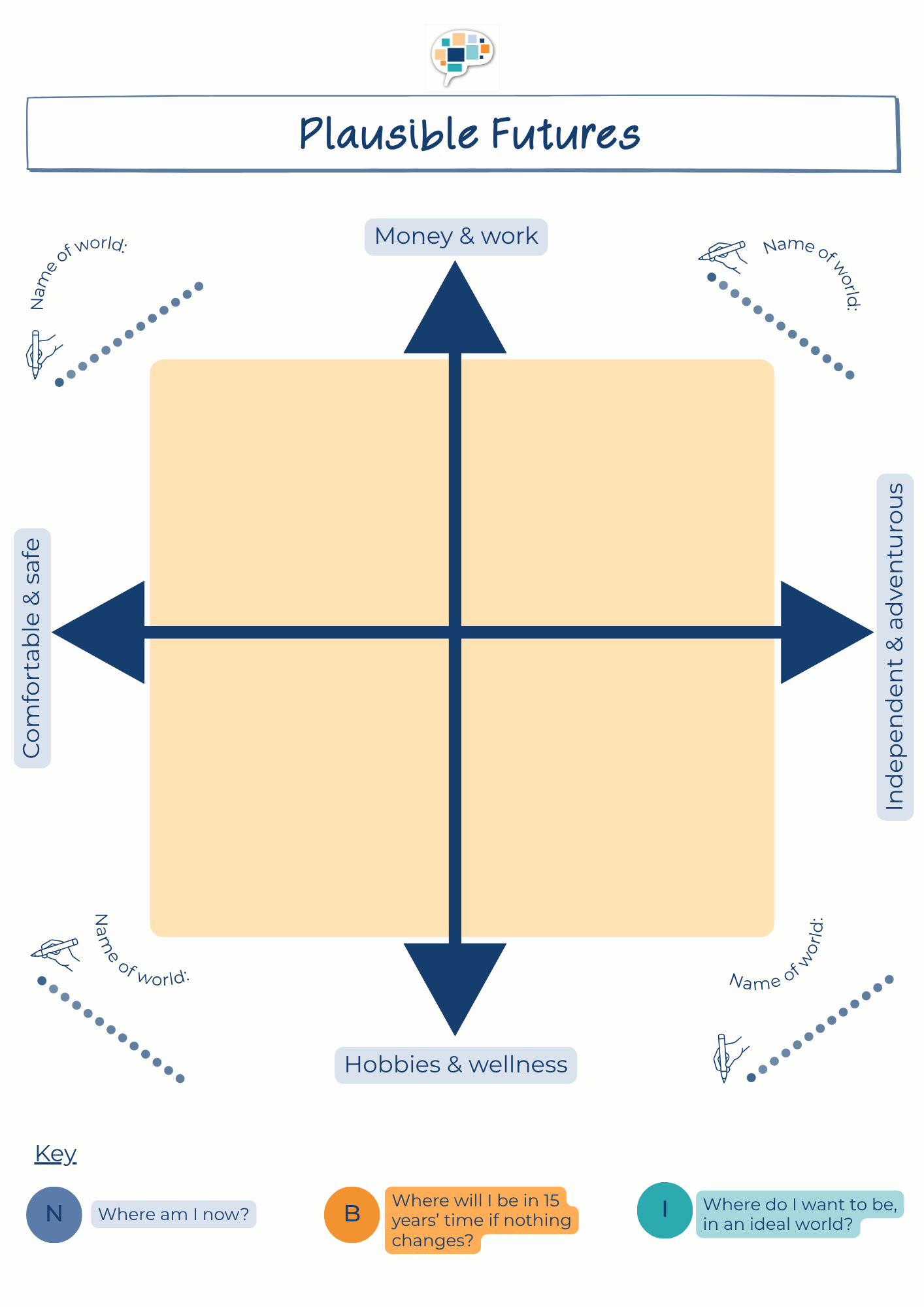
This session looks at how we envisage our futures, what do they look like to us, what are the opportunities and challenges facing us.
We then look at how to develop effective research questions that are meaningful to us.
PowerPoint presentation

Recorded presentation

Session plan

Activity 2: Plausible futures grid

Session 3: How to be a reflective and reflexive researcher
This session gives an insight into the importance of reflecting on your research, how to build this into your practice.
It then moves on to consider how you as a person can influence your own research and how being aware of this can result in more rigorous research.
PowerPoint presentation

Recorded presentation

Session plan

Activity 7: What makes you who you are

Session 4: Desk research
This session looks at how researchers use secondary data to inform their research or directly to answer their research questions.
It also looks at what ‘representation’ in research means for their research.
PowerPoint presentation

Recorded presentation

Session plan

Session 5: Primary research methods
This session aims to give researchers the opportunity to test and practice using six different types of research methods.
They can begin thinking about which research method(s) they might like to use for their research.
PowerPoint presentation

Recorded presentation

Session plan

Session 6: Research ethics
This session introduces the importance of research ethics.
Researchers look at case studies to consider ethical principles and then learn about the eight ethics principles.
Researchers prepare an ethics application for their own research.
PowerPoint presentation

Recorded presentation

Session plan

Activity 2: Ethics principles information slides

Download the ethics competency quiz or take it online.

Briefing note template

Combined PIS and consent for Qualtrics template

Consent form template

Participant information sheet template

Session 7: Research tools
This session aims to provide researchers with time, support and resources to explore different methods of data collection.
PowerPoint presentation

Recorded presentation

Session plan

Session 8: Am I ready to collect my data?

This session provides an opportunity to check in with the researchers. Is everything and everyone ready to start collecting data?
This session covers safeguarding considerations and provides an opportunity to practice interviewing and complete questionnaires.
PowerPoint presentation

Recorded presentation

Session plan

Activity 4: Safeguarding activity cards and answers

Self-help mind map

Researcher support card

Session 9: Qualitative data analysis
This session gives researchers details about what data analysis techniques they can use for their qualitative data analysis.
Researchers will be taught and will find out more themselves by researching some methods and discussing which might be most suitable for their own data. This includes practicing data analysis.
PowerPoint presentation

Recorded presentation

Session plan

Activity 4: Addicted to social media story

Activity 4: Carrying knives story

Activity 4: Gaming addiction story

Activity 4: Why young people vape story

Session 10: Quantitative data analysis

This session gives researchers details about what data analysis techniques they can use for their quantitative data analysis.
They will be taught and will find out more themselves by researching some methods and discussing which might be most suitable for their own data. This includes practicing data analysis.
PowerPoint presentation

Recorded presentation

Session plan

Session plan

Session 11: The data drop

This session provides the researchers with an opportunity to collect data from their peers, friends and family members.
It enables researchers to interact with different potential research participants in a safe setting.
PowerPoint presentation

Recorded presentation

Session plan

Session 12: What do you need support with and having a go at data analysis

This session gives researchers the chance to practice or conduct their own data analysis.
It also gives them a space to ask trainers any questions or to clarify parts of their research.
PowerPoint presentation

Recorded presentation

Session plan

Session 13: Evaluating my research

This session looks at how we evaluate the research we have conducted – the ‘so what?’ of what has been done.
We begin the discussion around how to effect change from the research that has been conducted.
PowerPoint presentation

Recorded presentation

Session plan

Session 14: Disseminating my research
This session looks at how we disseminate our findings. Looking at key considerations when planning how to disseminate your work, thinking about your audience and the medium you want to choose.
Providing an in-depth look at two ways of dissemination and then researchers create either a research poster or a policy brief.
PowerPoint presentation

Recorded presentation

Session plan

Activity 4: Policy brief
template

Activity 4: Research poster template

Policy brief example 1

Policy brief example 2

Policy brief example 3

Policy brief example 4

Policy brief example 5

Research poster example 1

Research poster example 2

Research poster example 3

Research poster example 4

Research poster example 5

Session 15: From draft to display

This session provides researchers with supported time to continue to work on their dissemination piece(s).
This is a flexible session for you, as a NxtGen trainer, to determine the needs of your researchers and set tasks as required.
PowerPoint presentation

Recorded presentation

Session plan

Session 16: Presenting my research

Exploring underlying belief systems and values and how they will help researchers connect more authentically to their project ideas.
Using creative tools such as presentation storytelling to convey facts with a clear resolution and call to action.
Practical exploration into public speaking skills to build confidence.
PowerPoint presentation

Recorded presentation

Session plan

Co-production assembly

The Co-Production Assembly event outlines a deliberative two-day event, bringing together researchers and decision-makers to discuss research outcomes from the NxtGen Researcher Programme.
They work together to create a set of recommendations to develop a service, policy or similar.
(Click on the image to enlarge it)
PowerPoint presentation

Recorded presentation – Day 1

Recorded presentation – Day 2

Session plan

Sheet A: Preliminary recommendations

Sheet B: Preliminary recommendations list

Sheet C: Prioritising preliminary recommendations

Sheet D: Preliminary primary and secondary recommendations

Trainer tips
Trainer toolkit

Being reflective and reflexive

Evaluating research

Qualitative data analysis

Quantitative data analysis

Research ethics

Research questions

Safeguarding

The point of research from a policy perspective

Student workbook

Resources
Curriculum and
qualification links

NxtGen logic model

Participant information sheet for researchers

Consent forms

University ethics application

Processes for obtaining informed consent

Safeguarding protocol

Safeguarding incident recording template

Researcher support card

Self-help mind map

Self-help MiNxtGen confidentiality statement

Advertising post

Programme role descriptor

Adult researcher MS application form

Young researcher MS application form

Interview programme and questions

Photograph consent form

Image release and consent form – Young researchers

Image release and consent form – Adult researchers

Unsuccessful pre-interview email (Applicant)

Successful pre-interview email (Applicant)

Successful pre-interview email (Parent/carer)

Successful pre-interview reference request

Successful post-interview email (Applicant)

Successful post-interview email (Parent/carer)

Unsuccessful post-interview email (Applicant and parent)

Evaluation measures and examples

Pre-test evaluation questionnaire

Demographics questionnaire

Social network activity (Script for interviewers)

Participant information sheet

Participant consent form

Risk assessment

Gives, gets, grounds template

NxtGen certificate example

Exit interview schedule